

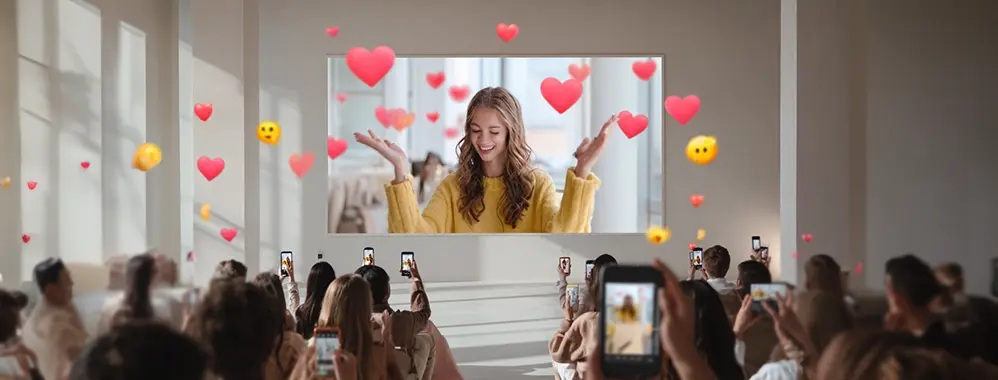
Digital avatars have moved from experimental technology to practical applications across industries, with virtual personalities now teaching university courses, hosting television shows, and generating millions in revenue. Today’s best AI avatars demonstrate how artificial intelligence combined with advanced animation creates experiences that attract audiences and bring brands profit. As organizations explore digital transformation strategies and creators look for new forms of expression, analyzing successful avatar use cases helps inform strategic decisions.
This guide examines the best AI avatars use cases across entertainment, business, education, healthcare, and media sectors.heal
AI avatars are transforming industries today. Take this opportunity and join those who’re changing the world with innovation
Best AI Avatars in Entertainment and Social Media
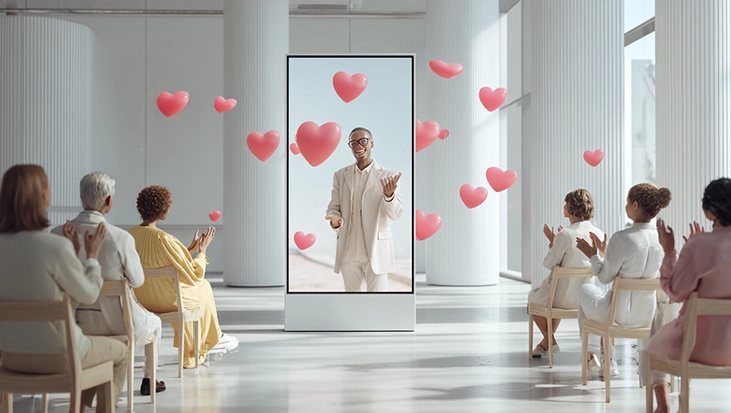
Virtual influencers and digital entertainers are now legitimate content creators who have massive followings and earn substantial revenue through brand partnerships. The entertainment industry successfully uses digital personalities to maintain consistent engagement because virtual influencers never age, sleep, or cause PR scandals.
The most successful virtual influencers and entertainers include:
Lil Miquela
Lil Miquela stands as the most successful virtual influencer, with over 3 million Instagram followers and partnerships with luxury brands including Prada, Calvin Klein, and Samsung.
Miquela has released original music on Spotify with millions of streams, appeared in fashion magazines, and even participated in virtual interviews. This multifaceted approach creates a parasocial relationship with followers who engage with her content.
Lu do Magalu
Lu do Magalu represents one of the most successful AI avatar examples in retail marketing, with over 6 million followers across social platforms. She’s currently the most visible virtual influencer in Brazil. Created for a local retail company Magazine Luiza, Lu has been active since 2009. Reports indicate that Lu’s content generates 3x higher engagement than the company’s traditional marketing campaigns.
Lu reviews products, offers shopping tips, and participates in unboxing videos that feel authentic despite her virtual nature.
Imma
Japanese virtual model Imma has redefined fashion photography with her bold style and streetwear aesthetic, accumulating over 388,000 Instagram followers and campaigns with Dior, Puma, and Valentino.
What sets Imma apart is her photorealistic appearance that often fools viewers into thinking she’s human. Her creators at Aww Inc. use advanced CGI techniques to place her in real locations alongside human models. She’s appeared on multiple magazine covers, participated in Tokyo Fashion Week, and even launched her own NFT collection.
Rozy
Rozy has emerged as South Korea’s leading virtual influencer, with over 150,000 Instagram followers and partnerships with major brands including Chevrolet, Calvin Klein, and Shinhan Life Insurance. Created by Sidus Studio X, Rozy generated over $1 million in revenue in her first year of operation, appearing in commercials, music videos, and fashion campaigns. Her name combines “robot” and “Gen Z,” reflecting her target demographic.
What makes Rozy particularly successful in the Korean market is her relatability — she’s designed as a 22-year-old with interests in travel, fashion, and sustainability that resonate with young Korean consumers. She’s released her own single, appeared on magazine covers, and even starred in a web drama series.
Noonoouri
Created by German designer Joerg Zuber, Noonoouri stands out in the virtual influencer space with her distinctive large-eyed, doll-like appearance and over 400,000 Instagram followers.
Noonoouri’s appeal lies in her advocacy work — she’s vegan, supports sustainable fashion, and promotes social causes including Black Lives Matter and environmental conservation. Her creators have deliberately kept her ageless and avoided controversial topics around body image by giving her a stylized rather than realistic appearance. She has worked with luxury brands including Dior, Versace, and Balenciaga. Noonoouri has also appeared at Paris Fashion Week, collaborated with high-fashion photographers, and released music that addresses social issues.
Best AI Avatars in Business and Customer Service

Companies worldwide use AI avatars for customer interactions, training, and brand representation, with measurable improvements in engagement and cost reduction.
TOP business and customer service avatars include:
Digital Einstein by UneeQ
Digital Einstein serves as an educational brand ambassador, answering questions about physics and the real Albert Einstein’s life. Created by UneeQ in partnership with the Hebrew University of Jerusalem, this avatar uses conversational AI to engage visitors in discussions about relativity, quantum mechanics, and Einstein’s personal philosophy. The project has handled millions of conversations since launch, with average interaction times exceeding typical chatbot sessions.
The avatar’s success lies in combining educational content with personality traits based on Einstein’s documented characteristics, like his humor and curiosity. Users report that Digital Einstein increases engagement significantly compared to traditional text-based content. This implementation shows how best AI avatars can preserve and share knowledge in engaging formats. This is also a great example of responsible and ethical recreation of historical figures’ likenesses for educational purposes.
Neon by Samsung
Samsung’s Neon project created artificial humans designed to serve as companions, service representatives, and entertainers. While initially met with skepticism, Neon avatars have found practical applications in customer service roles across Asia, handling routine inquiries for banks and telecommunications companies.
What distinguishes Neon is the focus on creating unique personalities rather than copying existing people. Each Neon has distinct characteristics, speaking patterns, and knowledge domains. Early commercial deployments showed reduction in average handling time for basic queries, though complex issues still require human intervention. The project demonstrates both the potential and current limitations of conversational avatars in service industries.
Best AI Avatars in Television and Broadcasting

News organizations and entertainment companies have introduced AI avatars as presenters, demonstrating the technology’s readiness for live broadcasting.
Popular AI news anchors and broadcasters:
- AI Xin’er by Sogou and Xinhua
- Sana by India Today
- Fedha by Kuwait News
- Ukraine’s AI-generated presenter Victoria
AI News Anchor by Sogou and Xinhua
China’s state news agency Xinhua has unveiled AI-powered news anchors, digital avatars designed to deliver news around the clock. One of the first avatars introduced was modeled after Xinhua presenter Qiu Hao, complete with realistic facial expressions, subtle gestures, and professional attire. Developed in collaboration with the Chinese search engine Sogou, these avatars were trained using machine learning to replicate the voices, mannerisms, and expressions of real broadcasters. According to Xinhua, the goal is to create a “lifelike image instead of a cold robot,” while ensuring tireless 24/7 news coverage.
Sana by India Today
India Today launched Sana as India’s first AI news anchor in 2023, with the avatar presenting daily news bulletins on the Aaj Tak channel. Sana can speak multiple Indian languages fluently and has presented thousands of news segments in her first year. Her ability to switch between Hindi, English, and regional languages makes her particularly valuable for India’s diverse linguistic landscape.
Fedha by Kuwait News
Kuwait News introduced Fedha as the country’s first AI-generated news presenter in 2023. Fedha presents news bulletins in classical Arabic and has become a regular feature on Kuwait News’ Twitter account, where she delivers daily news updates. Her name, meaning “silver” in Arabic, reflects her metallic, futuristic appearance designed to be distinctly non-human.
What makes Fedha unique is her transparency about being AI-generated — she introduces herself as an AI presenter and doesn’t attempt to mimic human presenters exactly. This honest approach has resonated with audiences who appreciate the novelty while understanding the technology’s role. Kuwait News reports increased social media engagement since Fedha’s introduction, particularly among younger demographics interested in technology.
Ukraine’s AI-generated presenter Victoria
Ukraine introduced Victoria as an AI-generated news presenter in 2023, created by the digital humans company Respeecher. Victoria presents news updates in Ukrainian and English, focusing on technology and innovation stories.
Victoria’s creators emphasize her role in preserving Ukrainian language and culture through technology. She can deliver news in perfect Ukrainian pronunciation, helping maintain linguistic standards in broadcasting. The avatar has been particularly effective in reaching younger audiences who are interested in both technology and current events.
Best AI Avatars in Healthcare and Therapy
Healthcare providers have deployed AI avatars for patient education, therapy sessions, and medical training, with documented improvements in patient outcomes. Medical applications of avatar technology focus on accessibility, consistency, and the ability to provide support without judgment or time constraints.
Best healthcare and therapy avatars:
- University of Rochester AI in Medicine Initiative
- Coventry University AI Avatar Medical Training
- Ohio State University Virtual Patient Project
University of Rochester AI in Medicine Initiative
Dr. Caroline Easton at the University of Rochester developed an innovative AI avatar platform for addiction therapy after watching her son play video games. The system uses AI-powered avatar coaches to help patients practice cognitive behavioral therapy skills in addition to traditional therapist-patient sessions. This NIH-funded application is currently being tested with randomized controlled trials. The university’s interdisciplinary team is tackling key ethical questions around medical AI, making sure technology supports — not replaces — human-centered care. They’re also focused on reducing algorithmic bias to help ensure fair and equitable healthcare delivery.
Coventry University AI Avatar Medical Training
Coventry University teamed up with PCS AI to create next-generation virtual patient simulators powered by AI. Thanks to this partnership, what used to take 100 hours to develop now takes just 30 minutes. The AI-driven avatars act like real patients, responding naturally and showing human-like behaviors. This gives medical students a safe space to practice history-taking and communication skills, while built-in tools let them review their performance and track progress.
Ohio State University Virtual Patient Project
Researchers at Ohio State University’s Advanced Computing Center for the Arts and Design created one of the first emotionally responsive virtual patient avatars. Their prototype patient, “Jack,” can show different emotions and answer questions just like a real patient, using conversational AI and detailed facial animation. This innovative approach blends artificial intelligence, virtual reality, and affective computing. The system can be used in many ways — from life-sized displays in clinical skills centers to simple web-based applications students can access from home.
Best AI Avatars in Virtual Concerts and Performances
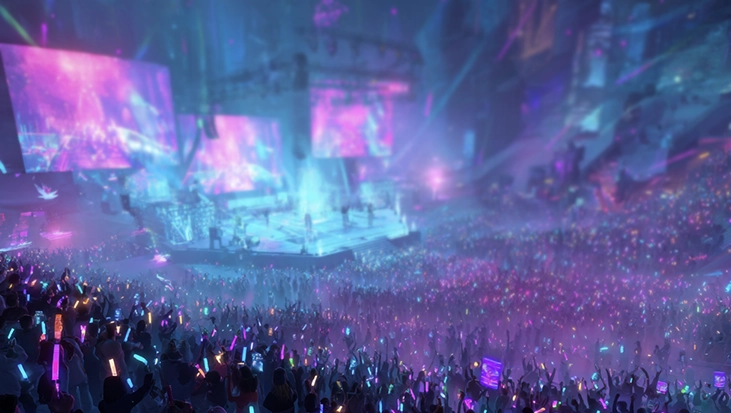
Virtual performers are no longer a novelty. They now headline major venues and generate substantial revenue through concerts and merchandise.
TOP virtual performers:
- Hatsune Miku
- K/DA by Riot Games
- The Weeknd’s Virtual Concert
- Gorillaz Virtual Band
- Polar by TheSoul Publishing
Hatsune Miku
Hatsune Miku remains the most successful virtual performer, with a career spanning nearly two decades. Miku-related content generates over $100 million annually through concerts, merchandise, and licensing. She has performed “live” concerts as a hologram at venues like Coachella, with tickets selling for premium prices. Her world tours consistently sell out venues across multiple countries, proving sustained demand for virtual performers.
The special thing about Miku is her open-source nature — anyone can create songs for her and use her voice for vocals via Vocaloid software.
K/DA by Riot Games
K/DA represents a unique fusion of gaming and music, with the virtual K-pop group consisting of League of Legends characters achieving mainstream music success. Their debut single “POP/STARS” accumulated over 500 million views on YouTube and reached #1 on the World Digital Song Sales chart. The group has released multiple albums and performed at virtual concerts within the game.
The success of K/DA demonstrates how best AI avatars can leverage existing fan bases while attracting new audiences. Riot Games reports that K/DA merchandise sales exceeded $25 million in the first year alone. The group’s appeal extends beyond gaming, with fashion collaborations and mainstream media appearances establishing them as legitimate music industry players.
The Weeknd’s Virtual Concert
The Weeknd’s virtual concert attracted over 2 million viewers, demonstrating the mainstream appeal of virtual performances. The event featured an avatar version of the artist performing in surreal digital environments impossible to recreate in physical venues.
The success prompted numerous artists to explore virtual concert opportunities, establishing a new revenue model for the music industry. These virtual performances allow artists to reach global audiences simultaneously while creating unique visual experiences that enhance the music.
Gorillaz Virtual Band
Gorillaz pioneered the virtual band concept when they debuted in 1998, proving that animated musicians could achieve mainstream success. The band consists of four animated members: 2-D, Murdoc Niccals, Noodle, and Russel Hobbs. With over 25 million records sold worldwide and seven studio albums, Gorillaz demonstrates the long-term commercial viability of virtual performers.
What makes Gorillaz unique is their ability to collaborate with real artists while maintaining their virtual identity. They’ve worked with musicians ranging from De La Soul to Elton John, creating a hybrid model where virtual and real performers coexist. The band has performed at major festivals including Coachella and Glastonbury using holographic technology and screen projections, with tickets for their world tours selling at prices comparable to top-tier human artists.
Polar by TheSoul Publishing
Polar has emerged as a successful virtual singer with over 1.7 million YouTube subscribers. Unlike other virtual performers who focus on live concerts, Polar’s strategy centers on consistent YouTube content and storytelling that creates emotional connections with fans. Her songs have accumulated hundreds of millions of views, with each release accompanied by animated music videos that expand her fictional universe.
What distinguishes Polar is her focus on Gen Z audiences through relatable themes about friendship, self-discovery, and empowerment. TheSoul Publishing reports that Polar’s content generates engagement rates 3x higher than traditional animated content, with fans creating fan art, cover versions, and even writing fanfiction about her character.
Conclusion
From Lil Miquela’s million-dollar brand partnerships to Ellie’s life-saving mental health screenings, the best AI avatars demonstrate value beyond technological novelty. Their success is a result of thoughtful implementation focused on specific use cases rather than the general “technological innovation”.
Organizations exploring AI avatars should consider both the achievements and challenges of this technology. Whether enhancing customer service, creating educational content, or developing entertainment properties, the avatars mentioned in this article can be used as blueprints for effective implementation while highlighting important considerations for responsible deployment.
FAQ
What are AI Avatars?
AI avatars are intelligent digital characters powered by artificial intelligence that can interact, learn, and respond in real-time across applications ranging from gaming NPCs to corporate training instructors and customer service representatives.
How Do AI Avatars Differ from Traditional Digital Characters?
Unlike static digital characters, AI avatars use machine learning, natural language processing, and behavioral algorithms to provide dynamic, context-aware interactions that adapt to user behavior and environmental changes.
Can AI avatars effectively replace human employees in customer service?
Current implementations show AI avatars work best as supplements rather than replacements. Most successful deployments follow a hybrid model where avatars handle repetitive inquiries, allowing human employees to focus on complex situations.
What makes an AI avatar successful in real-world applications?
Successful AI avatars share several characteristics: emotional intelligence, cultural relevance, consistent availability, and clear value proposition.
Emotional intelligence enables them to detect and respond to user feelings. Cultural relevance ensures they resonate with target audiences through appropriate language, references, and behavior patterns. Consistent 24/7 availability provides value that human counterparts can’t match. Clear value proposition addresses specific user needs, whether that’s judgment-free advice, instant service, or personalized learning.
