

Introduction
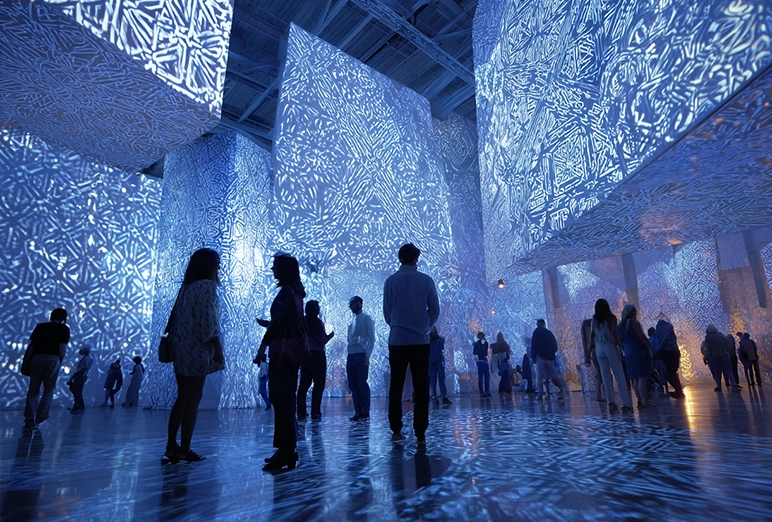
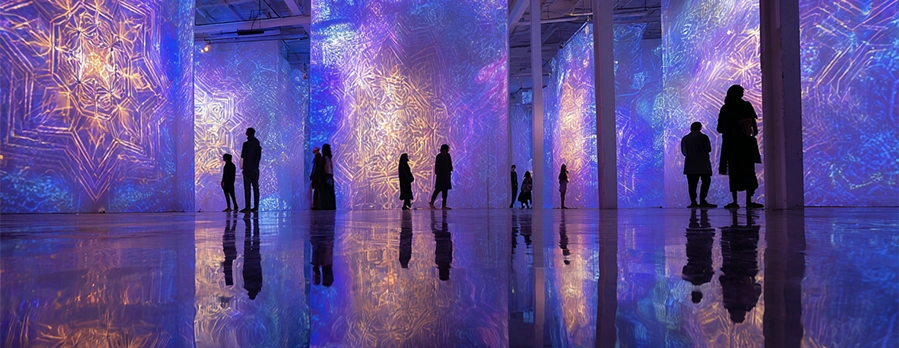
Immersive experiences are reshaping the way people connect with art, music, culture, and storytelling. Instead of being passive spectators, visitors are invited to step inside environments that blend technology, creativity, and interactivity. From domes that project galaxies in razor-sharp resolution to digital installations that respond to movement, immersive experiences blur the lines between audience and artwork.
In 2025, these attractions are more ambitious than ever, using cutting-edge visuals, surround sound, and multisensory design to transport audiences to new worlds. If you regularly look up “immersive experience near me” online, this article will be helpful to you. Whether you’re exploring a futuristic museum, wandering through digital forests, or rediscovering a classic album in an audiovisual dome, experiences in this list promise unforgettable encounters that go beyond traditional entertainment.
What Is an Immersive Experience?
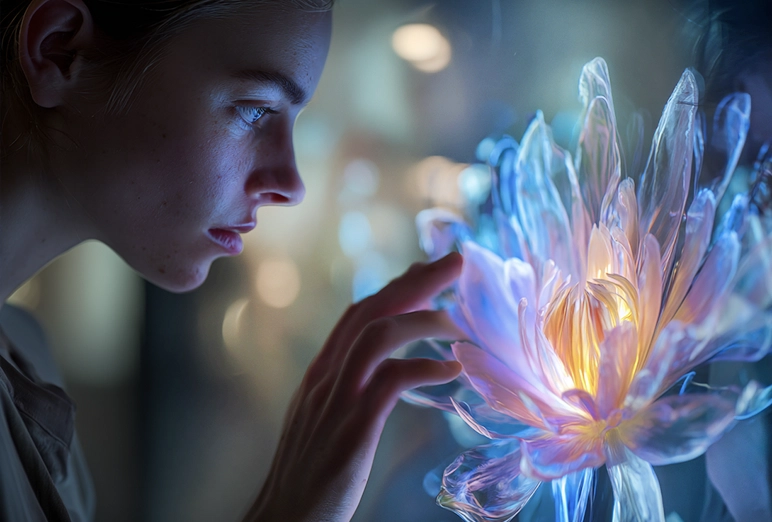
An immersive experience is a type of event or installation that fully surrounds participants, often engaging multiple senses at once — sight, sound, and sometimes even touch or scent. Unlike conventional exhibits or performances, an immersive experience uses light, sound, and space to place visitors inside the story or environment. An immersive exhibit might use projection mapping, LED walls, virtual reality (VR), augmented reality (AR), and spatial audio to create a sense of presence. The goal here is to make people feel like active participants rather than passive observers.
These experiences can take many forms. There are art exhibitions where brushstrokes move across walls and floors and music events where surround sound and visuals bring songs to life. What sets them apart is their ability to engage emotions and offer fresh perspectives on familiar subjects. In short, an immersive experience isn’t just about looking — it’s about being inside the moment.
| Projection Mapping | Turns physical objects, buildings, or stages into dynamic canvases by overlaying visuals that move and change with the environment. |
| LED Walls | Provide ultra-bright, high-resolution visuals that surround participants, often replacing traditional backdrops with lifelike environments and enhancing realism. |
| Virtual Reality (VR) | Fully immerses users in a digital world by blocking out physical surroundings and replacing them with interactive 3D environments. |
| Augmented Reality (AR) | Blends digital elements with the real world, overlaying information, visuals, or characters onto a real environment. This layering enhances reality rather than replacing it, making everyday spaces feel more magical and engaging. |
| Spatial Audio | Creates 3D soundscapes where audio shifts depending on the listener’s position and movement. This mirrors how sound works in real life, grounding the experience and reinforcing the illusion of physical presence. |
TOP Local Immersive Events in 2025
Superblue Miami
Located in a 50,000-square-foot warehouse, Superblue Miami offers by far the most ambitious immersive art experience in the city. The venue is designed to spark curiosity and conversation, making art something you walk through, touch, and experience on a physical and emotional level. Visitors get to explore a mirrored labyrinth that creates endless reflections and a Ganzfeld effect room where a monochrome field of light challenges your perception of space and depth. Superblue Miami is a playground for people who want art that feels alive, engaging, and thought-provoking.
WNDR Museum
With locations in several American cities, including Chicago, San Diego, Seattle, and Boston, the WNDR Museum reimagines the traditional gallery format by encouraging full interaction with its exhibits. Instead of “do not touch” signs, visitors are invited to press, step, sit, and even lie down to activate installations. A popular feature of this immersive art experience is the reactive floor, where lying down causes ripples of color to spread beneath you. Other highlights include large-scale light installations and mirrored rooms that alter your sense of space. Each location showcases unique works but follows the same philosophy: visitors should be participants, not passive observers.
Claude Monet: The Immersive Experience
If you type “immersive experience near me” into your search engine, chances are this event will be the one that pops up first. A pioneer in the digital exhibition trend, Claude Monet: The Immersive Experience has become one of the most popular traveling art installations worldwide. Using floor-to-ceiling projections, VR headsets, and multisensory elements like bridges covered in flowers, the exhibit brings Monet’s impressionist masterpieces to life. The immersive experience allows visitors to literally walk into Monet’s world, surrounded by giant moving versions of Water Lilies, Haystacks, and Impression, Sunrise. While the exhibit can be enjoyed in any city, there’s something particularly special about experiencing Monet’s art in a European setting, closer to where his works were created.
Satosphere – The Dark Side of the Moon
To mark the 50th anniversary of Pink Floyd’s legendary album, Montréal’s Satosphere dome at the Society for Arts and Technology (SAT) invites audiences to step inside a fully immersive reinterpretation of The Dark Side of the Moon. One of only 100 domes worldwide licensed to host the experience, Satosphere pairs the band’s groundbreaking music with a dazzling audiovisual journey across space and time. The visuals, crafted by NSC Creative in collaboration with longtime Pink Floyd designer Aubrey Powell, expand each track into a narrative of light, motion, and imagination. From futuristic cosmic landscapes to retro nods at the band’s iconic imagery, the event redefines how fans experience the album.
The music itself has been remastered in surround sound, optimized for the dome’s cutting-edge system installed during recent renovations. The Satosphere’s equipment ensures that this event isn’t just a listening party, but a sensory voyage. For lifelong fans and first-time listeners alike, this dome experience is a rare chance to rediscover a cultural milestone in a bold new format.
Clubbing
Paris’s Grand Palais Immersif hosts Clubbing, an ambitious exhibition dedicated to the evolution of nightlife. Curated by Pierre Giner in collaboration with Trafik and Poptronics, the immersive exhibit recreates the sensory intensity of clubs across decades. Visitors begin at the door, where a “bouncer” sets the mood, then move into spaces designed to echo famous venues such as The Loft, Studio 54, and the Hacienda. Across 1,200 square meters, light, sound, and projection map the story of club culture while offering opportunities to dance, interact, and explore.
Guests can create avatars, discover club fashion archives, and hear over 200 tracks selected by DJ Patrick Vidal. With rooms in constant motion, immersive visuals, and a participatory atmosphere, the exhibition is less about watching and more about joining the party. It’s a celebration of nightlife as both a social phenomenon and a cultural art form.
V&A East Storehouse
The V&A East Storehouse in Stratford offers a new way to experience one of the world’s great collections. Unlike a traditional museum with curated permanent displays, this vast 16,000-square-meter space is a working storehouse where over 250,000 objects are accessible to the public. Visitors can wander through four floors of artifacts spanning centuries and continents, from ornate bronze sculptures and ceramics to couture fashion and vintage musical instruments. This immersive experience even offers an “Order an Object” service, allowing visitors to request items from storage for private viewing.
Color Hotel
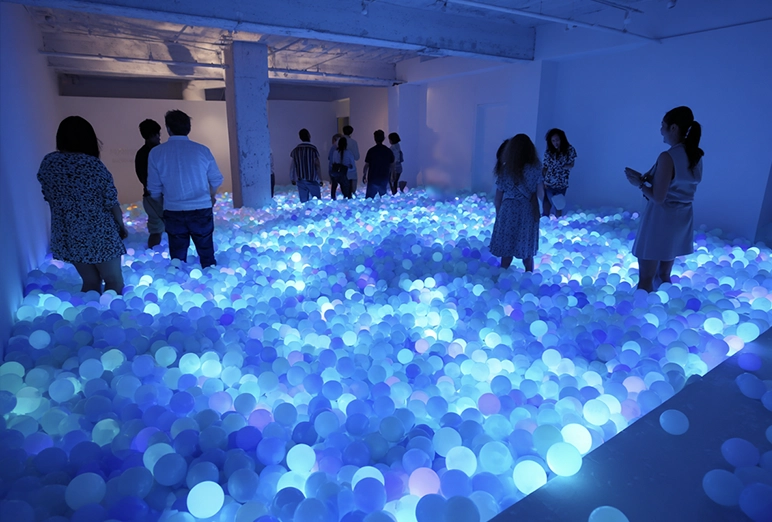
Inside Rome’s Wow Side Shopping Centre, the Color Hotel transforms 4,000 square meters into a vibrant, multisensory immersive experience. Despite the name, there are no overnight rooms. Instead, visitors explore 11 themed spaces, each dedicated to a specific color and designed to evoke joy, play, and creativity. Highlights include the Pillow Room, where guests can tumble into giant cushions or stage playful pillow fights, and the Furry Room, drenched in pink, where you can try on quirky garments and snap photos. The Black Room features hundreds of glowing balloons suspended in midair, creating a surreal dreamscape.
Contributions from Italian artists like Motorefisico, Mr. THOMS, and Studio Cliché make each room a unique work of immersive design. Playful, interactive, and highly Instagrammable, Color Hotel offers something between an art gallery, playground, and fashion set.
Prague Planetarium
After a two-year renovation, the Prague Planetarium is reopening with a groundbreaking upgrade: Europe’s first fully digital LED dome powered by Cosm’s CX System. The new dome features more than 12,000 LED panels and 45 million diodes, producing visuals in 8K+ resolution that are 100 times brighter than traditional projection systems. This leap in technology allows for seamless, ultra-realistic presentations of astronomy, science, and culture. Programs will range from educational shows about space and earth sciences to artistic performances that experiment with light and sound.
Théâtre des Lumières
Created by Culturespaces, Théâtre des Lumières transforms Seoul’s historic Walkerhill Theater into a 35,575-square-foot digital art center with ceilings nearly 70 feet high. Using high-definition projectors and an advanced 3D sound system, the venue creates an immersive experience that surrounds visitors in light and sound. Culturespaces is known worldwide for reimagining unused, culturally significant buildings into centers for digital art, making art approachable for diverse audiences.
teamLab Borderless
Tokyo’s teamLab Borderless is the flagship immersive exhibit of the world-renowned collective teamLab, known for pushing the boundaries of digital art. Unlike traditional galleries, the exhibits are designed without walls or limits. Instead, artworks flow from one room to the next, constantly evolving and interacting with visitors. Each step alters the experience, creating a sense of discovery and unpredictability. A standout feature is the EN Tea House, where serving tea triggers an endless bloom of digital flowers within your cup.
TeamLab’s concept of a “borderless world” fosters collaboration and wonder, as visitors often create parts of the artwork by moving, touching, or even simply being present. With locations in Singapore, Hong Kong, and Germany, teamLab has become a global phenomenon, but the Tokyo site remains its most iconic. It’s an immersive experience that blends art, science, and imagination into a single living canvas.
Museum of the Future
Shaped like a giant silver ring covered in Arabic calligraphy, Dubai’s Museum of the Future has quickly become an architectural icon and a destination for forward-looking innovation. Unlike traditional museums that preserve the past, this institution explores what the future might hold in the year 2071. Inside, visitors embark on journeys that combine VR, AR, robotics, and AI-driven installations.
Highlights include boarding a space shuttle to a futuristic space station, walking through the “Vault of Life” with thousands of digital species, and experiencing a wellness hub where AI reads emotions and offers balancing treatments. Children can try robotics workshops, while adults explore speculative designs for future cities. This immersive experience blends science, storytelling, and imagination, making the museum both educational and inspiring.
Infinity des Lumières
Inside the Dubai Mall, Infinity des Lumières is the Middle East’s largest immersive experience art space, spanning 2,700 square meters with towering LED walls and floors. Visitors are surrounded on all sides by animations, projections, and soundscapes that reinterpret famous artworks in dazzling motion.
The current program, Raise Vibration, merges the creative worlds of Gaudí, Kandinsky, and Klee with animated effects and a contemporary soundtrack. Unlike timed entry shows, the exhibition runs continuously in a 45-minute loop, allowing guests to enter at any time and stay as long as they wish. Infinity des Lumières combines art history with modern spectacle, offering both education and entertainment in a visually stunning environment.
The LUME – Leonardo da Vinci
At The LUME Melbourne, visitors step directly into the world of Leonardo da Vinci, the quintessential Renaissance polymath. The exhibition uses AI, VR, and interactive displays to highlight his most famous artworks, inventions, and ideas. Guests can marvel at a digital replica of the Mona Lisa, explore 50 reconstructed machines based on da Vinci’s designs, and interact with installations that connect Renaissance thought with modern technology.
The immersive experience transports visitors from the streets of Florence to the courts of Milan, tracing da Vinci’s life and legacy. Created by Grande Experiences, The LUME is designed to be multisensory, blending visuals, sound, and tactile displays. It’s a comprehensive exploration of one of history’s greatest minds, made accessible for all ages.
Khroma
Berlin’s Khroma is the city’s first new media art center, devoted to exploring the possibilities of digital art through light, sound, and immersive technology. Twelve international multimedia artists contribute works that challenge perceptions of technology’s role in society. One standout installation, enter 2023 by Ksawery Komputery, captures a visitor’s image and transforms it into streams of light projected onto a massive screen. The piece raises questions about identity and the ways we upload ourselves into digital environments daily.
Other installations explore themes of space, memory, and connection, all presented through cutting-edge visual techniques. Khroma is not only an art center but also a laboratory for testing the boundaries of digital creativity. With Berlin already known for its vibrant contemporary art scene, Khroma positions itself as a platform for experimentation in technology-driven culture.
Pac-Man Live Experience
In Dubai, the Pac-Man Live Experience brings the classic arcade icon into the real world through a huge interactive maze. Using projection mapping, lights, and digital effects, the space recreates the energy of the original game on a life-sized scale. Visitors navigate corridors, collect Power Pellets, and dodge costumed “Ghosts,” competing for high scores in real time. Each turn introduces new challenges and visual surprises, blending physical gameplay with digital immersion.
The experience balances nostalgia with modern technology, making it fun for longtime Pac-Man fans and newcomers alike. It’s particularly popular with groups, offering both competition and collaboration as players try to outsmart the maze. With its playful design and photo-friendly atmosphere, it’s positioned as one of Dubai’s most exciting gaming attractions.
Conclusion
Immersive experiences are redefining how audiences engage with art, music, science, and culture. By combining technology, interactivity, and sensory design, they make every visit a personal journey. Immersive experiences are reshaping entertainment, education, and social interaction, offering unforgettable encounters that linger long after the visit ends.
Frequently Asked Questions
What Are the Core Characteristics That Make an Experience Immersive?
An immersive experience engages multiple senses simultaneously, often combining sight, sound, and movement to create a feeling of presence. Storytelling, interactivity, and the use of cutting-edge technology such as VR, AR, or projection mapping are key components.
How is an Immersive Experience Different from Interactive Media?
While both involve engagement, immersive experiences fully envelop participants in a designed environment, making them feel part of a story or space. Interactive media, such as apps or games, allows input and control but does not always create a sense of physical or sensory presence. Immersive experiences emphasize total environmental engagement and multi-sensory stimulation, often in real-world spaces. In contrast, interactive media may be limited to screens or single points of interaction.
What Are the Main Types of Immersive Experiences Available Today?
Immersive experiences can be broadly categorized into art, music, science, and themed entertainment. Art-based exhibits include digital galleries like teamLab Borderless or Infinity des Lumières. Music and audiovisual experiences, such as Satosphere or Meow Wolf concerts, combine sound with visual storytelling. Science and educational spaces, including planetariums and the Museum of the Future, use technology to simulate learning and exploration. There are also hybrid or themed environments that merge multiple elements for entertainment or social engagement.
How Will Immersive Experiences Change Social Interaction and Work?
Immersive environments create new ways for people to connect, collaborate, and communicate by providing shared, engaging spaces. In professional settings, VR and AR simulations are being used for training, team-building, and remote collaboration. Social interaction in immersive settings becomes more dynamic, encouraging exploration, participation, and creativity.
How Do You Choose the Right Immersive Experience Solution for Your Needs?
Start by identifying the goals of your experience — education, entertainment, team-building, or marketing. Consider the target audience, desired level of interaction, and available space or technology. Evaluate options for sensory engagement, scalability, and ease of integration with existing systems or venues. Finally, assess budget and support needs, ensuring the solution aligns with both creative vision and practical constraints.
