


When a holographic avatar appears on stage, the audience is witnessing motion capture, real-time rendering, spatial audio, and holographic AI working in tandem to create a unified experience. This article breaks down the technology stack behind immersive hologram performances — from creating digital performers to incorporating photorealistic projection and spatial sound.
What is a Hologram Avatar
A holographic avatar is a digitally created human figure projected into physical space to simulate live presence. Unlike a flat video, a holographic AI avatar appears three-dimensional, creating the illusion of a real human occupying the stage.
Most holograms aren’t what sci-fi movies told us they were. Most stage hologram effects rely on Pepper’s Ghost — a thin metalized film stretched at a 45-degree angle, with a projector casting the avatar image onto it. The audience sees the reflected image as a 3D figure on stage. This technique powered some of the most impressive virtual performances in history, including the Tupac hologram at Coachella in 2012 and Michael Jackson’s 2014 Billboard Music Awards performance.
These days, holographic AI systems go beyond simple hologram projection. Modern holographic technology often incorporates AI-driven conversation through natural language processing and gesture recognition that adjusts the avatar’s behavior based on audience input. All that helps create an interactive experience that can be used not only on stages during musical performances but also for marketing purposes during trade shows and exhibits. Enclosed Holobox displays that present life-size 3D avatars viewable without glasses help take interactions with digital humans to another level, creating a hyper-realistic illusion of a real human.
While a basic hologram replays pre-recorded content, a holographic AI avatar can engage in genuine real-time interaction with audiences.
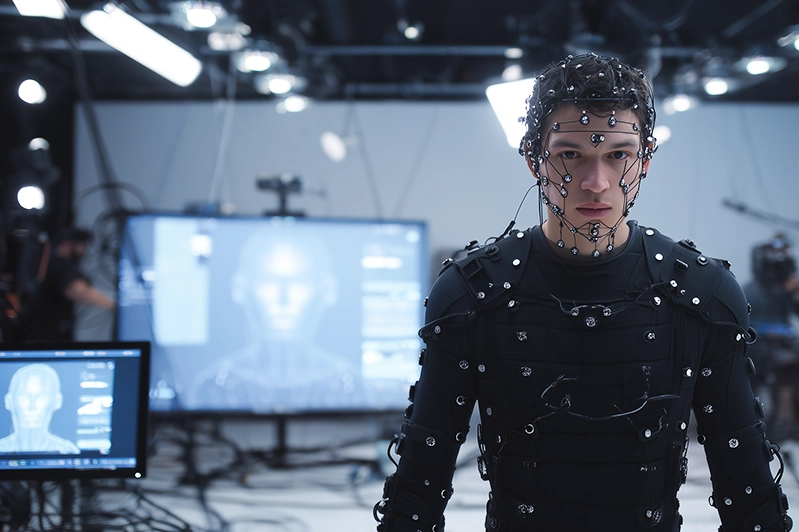
Creating Holographic Avatars: From Concept to Digital Human
Building a photorealistic holographic avatar starts with capturing the real human it represents, then translating that data into a digital model. The pipeline involves six core stages, each one adding a new layer of realism and interactivity.
Scanning
Every holographic avatar begins as a scan. Technologies like photogrammetry translate a real person’s face and body into a digital format in precise detail. Every pore, wrinkle, and contour is mapped to serve as the foundational geometry.
Modeling and Rigging
The raw scan becomes a clean digital mesh in 3D software. Artists add textures for skin, hair, and clothing, then rig the model with a virtual skeleton and facial blend shapes that control every movement, from full-body gestures to subtle shifts in expressions.
The more detailed the avatar’s facial expressions are, the less is the chance that it will look “uncanny” to your audience. A lifeless face that looks almost but not quite human is something you get when you ignore the nuances.
Motion Capture
Motion capture is the bridge between a real human performer and a believable holographic avatar. Reflective markers or AI-driven computer vision track the human model’s body movements, translating their performance into animation data.
Real-Time Rendering
The avatar must look photorealistic at 60+ frames per second. Game engines like Unity and Unreal Engine handle real-time rendering, optimizing 3D models for interactive environments across web, mobile, kiosks, and immersive displays.
For holographic AI avatars at events, rendering operates with zero latency: facial expressions, lip sync, and gestures respond instantly to conversation input. The rendered output then feeds the display system.
Spatial Audio
A holographic avatar that looks real but sounds flat breaks the immersion. Spatial audio positions the avatar’s voice in 3D space so it appears to originate from the figure’s physical location.
For large venues, the avatar’s voice is amplified through speakers strategically placed around the space. For smaller holographic AI deployments, directional speakers create a focused zone around the display, enhancing the sense of direct human interaction even in noisy environments.
AI Integration
AI is what transforms a static digital human into an interactive avatar. It’s crucial for creating AI avatars for events like exhibitions or post-concert meet-and-greets with virtual artists. Here are the key components:
- Context-aware conversations — AI models parse human speech, remember interaction history, and generate contextual responses
- Voice synthesis — natural-sounding speech that fits the avatar’s identity and personality
- Gesture logic — body language and facial expressions synced with dialogue
- Custom personality design — behavior aligned with the brand or performer the avatar represents
This is how leading avatar and immersive experience companies like Digital Residency produce avatars for real-world business applications. Motion capture animation combined with context-aware AI creates a holographic avatar that gestures naturally during live human conversation. These artificially intelligent digital humans are scalable across web, mobile, kiosks, and game engines. They operate with enterprise-grade security and work without delays even in offline environments.
Famous Hologram Performances That Changed Entertainment
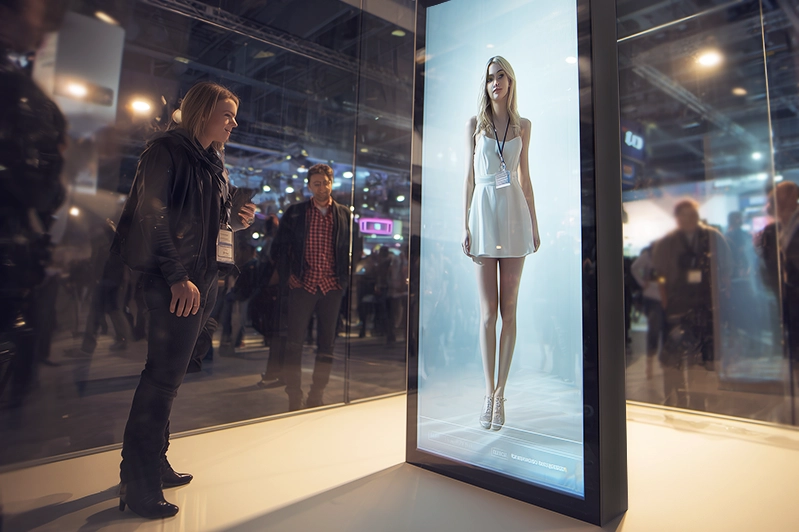
Holographic avatar performances have evolved from novelty into a sustainable entertainment format.
Let’s go through each one of these icons hologram performances and see what was it that made them stand out:
- Tupac Shakur at Coachella (2012)
- Michael Jackson at Billboard Music Awards (2014)
- Frank Zappa “The Bizarre World” Tour (2019)
- Whitney Houston Hologram Tour (2020)
- Maria Callas Hologram Tour (2018–2023)
Tupac Shakur at Coachella (2012)
A CGI recreation of the late rapper appeared alongside Snoop Dogg and Dr. Dre at Coachella, performing their hit tracks before almost 80,000 fans. The production included using a Pepper’s Ghost rig with Musion Eyeliner foil, which is a high-definition 3D projection system. The five-minute virtual avatar performance won the Cannes Lions Titanium Award and sparked interest in holographic avatar concerts worldwide.
Michael Jackson at Billboard Music Awards (2014)
Five years after the death of the Prince of Pop, a holographic avatar of Michael Jackson performed «Slave to the Rhythm» at the Billboard Music Awards with a live band and 16 dancers. The performance took nearly six months to create and debuted new projection technology, setting a benchmark for choreographed holographic AI spectacles on broadcast television.
Frank Zappa “The Bizarre World” Tour (2019)
The Guardian once referred to this show as “holographic necromancy” The holographic avatar of Frank Zappa performed alongside original band members who played live across the U.S. and Europe, premiering never-before-heard tracks. Those who’ve seen the show live tend to recall one specific moment: real, unseen footage from 1974 was used to create the late musician’s hologram, adding to the magical feel of the whole act.
Whitney Houston Hologram Tour (2020–2022)
Technology like CGI face mapping and laser projections were used to bring what’s been called as the most magical and awe-inspiring experience in the world of entertainment. Backed by live dancers, backup singers, and a full band, the hologram performed Houston’s greatest hits in an intimate format, fulfilling what the singer had planned before her death.
Maria Callas Hologram Tour (2018–2023)
The most acclaimed classical holographic avatar production, “Callas in Concert” debuted in 2018 and toured globally through 2023, including sold-out centenary shows in Sydney, Melbourne, and Dallas. To achieve high-quality audio, Callas’s vocals were extracted from vintage recordings and digitally enhanced while preserving the intricate tones and colors of the original. Outstanding vocals paired with motion-captured body doubling resulted in a show that proved that there’s a place for holographic AI even in classical music.
Closing Thoughts
While every holographic avatar performance relies on the same integrated stack, none of them are alike. Holographic AI productions showcase that there’s no bounds to what can be achieved when powerful technology lands in the hands of people who see it as art — not simply a tool to solve business problems. Channeling the strengths of the holographic AI technology while acknowledging its weaknesses — this is the only way to create something that has real impact.
FAQ
What is the difference between a holographic avatar and a holographic AI avatar?
The main difference between a 2D avatar and a 3D avatar is that the former is a two-dimensional image, while the latter is a fully rendered three-dimensional model.A standard holographic avatar displays pre-recorded content that repeats identically. A holographic AI avatar adds artificial intelligence: natural language processing for conversation, gesture recognition for audience interaction, and adaptive behavior. This makes holographic AI avatars ideal for trade shows, customer service, brand experiences, and virtual post-concert meet-end-greets.
Can holographic AI avatars interact with a live audience?
Yes. Modern holographic AI avatars use speech recognition, NLP, and real-time rendering to hold live conversations, adapt responses, and gesture naturally.
How long does it take to create a holographic avatar?
Timelines vary by complexity of the project. Will there be 3D scanning and motion capture sessions to capture the likeness of a real person in detail? Will your avatar need an AI personality and a fully customized look? How realistic do you want it to look? What other functionality apart from being interactive do you want it to have? Answering these questions will help you understand your expectations — and communicate them to the production team of your choice.
What are the most well-known holographic performances?
Tupac Shakur’s virtual appearance at Coachella and Michael Jackson’s avatar performance at Billboard Music Award are largely considered to be the most impactful digital human performances in history.
