

Overview
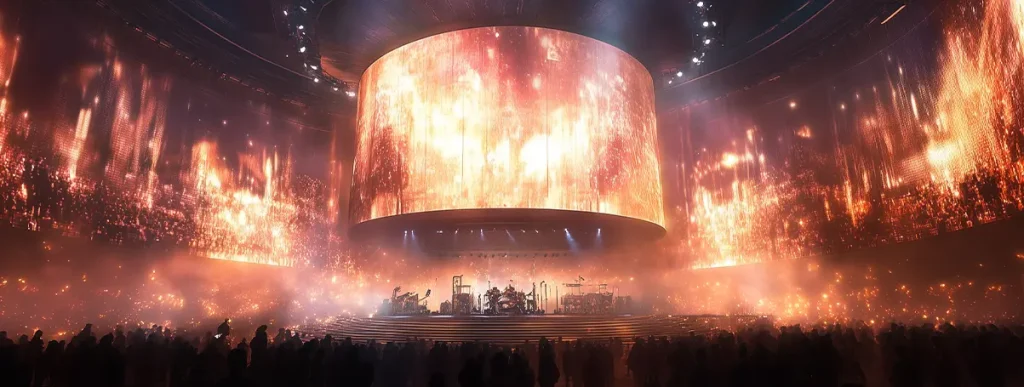
From the ancient grandeur of Greek amphitheaters to the opulent halls of baroque opera houses, stage design has continually evolved to meet the needs of performers and audiences alike. This medium of expression is still evolving, leading to continued innovations in concert stage design. 3D stages and 360-degree concert stages are two of the most exciting new stage designs, revolutionizing how performances are experienced and offering new levels of immersion and interaction for audiences.
Understanding 360-degree concert stages
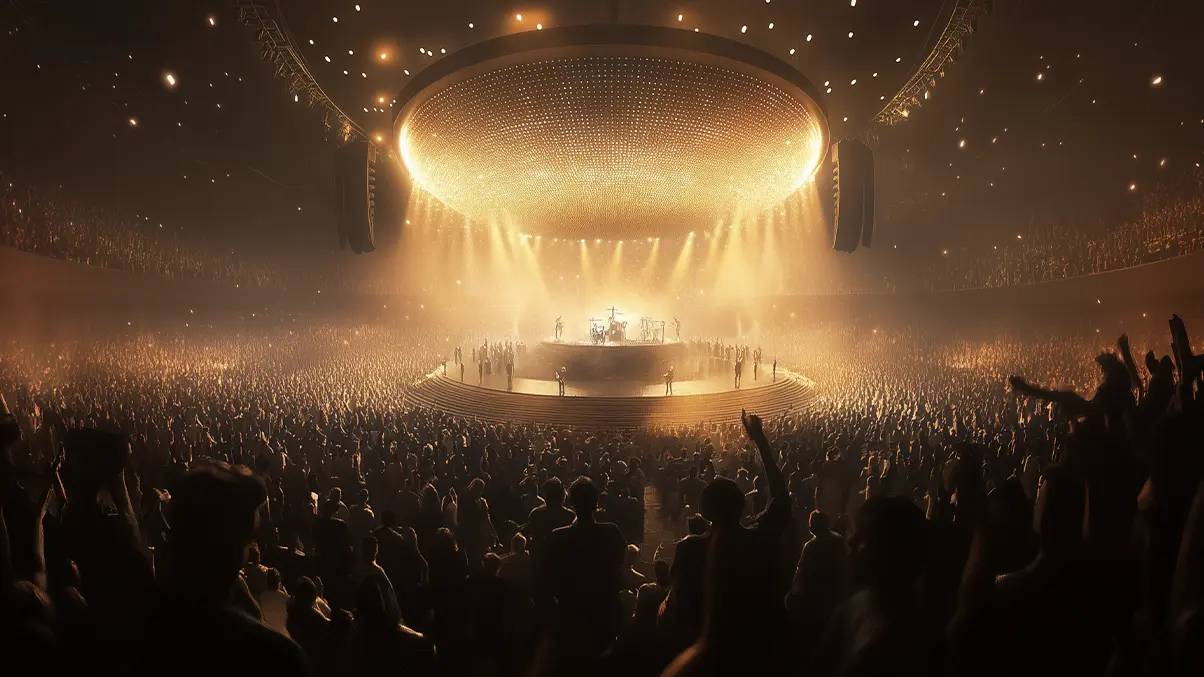
360-degree concert stages are designed to immerse the audience in the performance from every angle, ensuring that spectators can enjoy a panoramic view no matter where they are seated. The structure of these stages is typically circular, with tiered seating arranged around the center of the stage. This layout provides an unobstructed view and a sense of intimacy, as the performer is surrounded by the audience.
In addition to the physical design, 360-degree concert stages often incorporate advanced audio systems. These systems are engineered to provide spatial sound, ensuring that every audience member, regardless of their seat, hears the performance clearly and without distortion.
Moreover, these stages are often enhanced with dynamic technological elements such as moving platforms, complex audiovisual effects, and cutting-edge lighting designs. These innovations allow for a greater sense of engagement, where the environment can change in real-time to complement the performance.
One of the main advantages of 360-degree concert stages is their ability to foster a more intimate and interactive stage experience. Performers are no longer confined to one side of the stage, and the audience can experience the performance from all angles, creating a stronger connection between the two.
What are 3D concert stages and how do they work?
3D stages employ high-definition screens and projections to create a virtual concert stage that moves and evolves with the performance. The technology behind 3D concert stages allows for the creation of intricate digital environments, characters, and special effects that complement the music and storytelling.
These 3D backdrops are often designed by a team of animators and digital artists who work closely with the performers to ensure that the visual elements align with the performance’s narrative. The integration of 3D models and animations with live action creates a seamless, dynamic environment that enhances the audience’s experience. The backdrop can change throughout the performance, offering visual surprises and new layers of meaning, which would be impossible to achieve with traditional stage design.
Benefits and challenges of unconventional stage design
Unconventional stage designs like 360-degree concert stages and 3D concert stages offer significant advantages for performers and audiences. These innovative approaches to stagecraft create memorable, immersive concert experiences that captivate and engage viewers on a deeper level. By incorporating advanced technology, these stage designs also elevate the performance itself, giving artists new tools to express their creativity.
Benefits of unconventional (360 or 3D) concert stages:
- Deeper audience immersion. A 360 concert stage places the performer at the center of the action, ensuring that everyone enjoys a panoramic view regardless of where they’re seated. With the circular layout, there are no bad seats, which helps immerse the audience fully into the performance.
- Stronger performer–audience connection. On a circular stage, performers are no longer confined to one side of the venue. They can move freely and engage with fans from every angle, fostering a more personal and interactive stage experience.
- Dynamic, real-time environments. These stages support moving platforms, complex audiovisual effects, and cutting-edge lighting designs. The environment can shift in real time to complement each song, creating visual surprises impossible with traditional set design.
- Limitless creative possibilities. A virtual concert stage built with high-definition screens and projections lets designers craft intricate digital worlds, characters, and special effects. These backdrops evolve throughout the performance, adding new layers of meaning that traditional sets simply cannot achieve.
- Enhanced spatial audio. Immersive stage formats often incorporate advanced audio systems engineered to provide spatial sound. Every audience member, regardless of their seat, hears the performance clearly and without distortion.
For artists and event planners willing to invest in the experience, the payoff is clear: audiences remember immersive shows long after the final note fades.
Challenges of immersive concert stage formats:
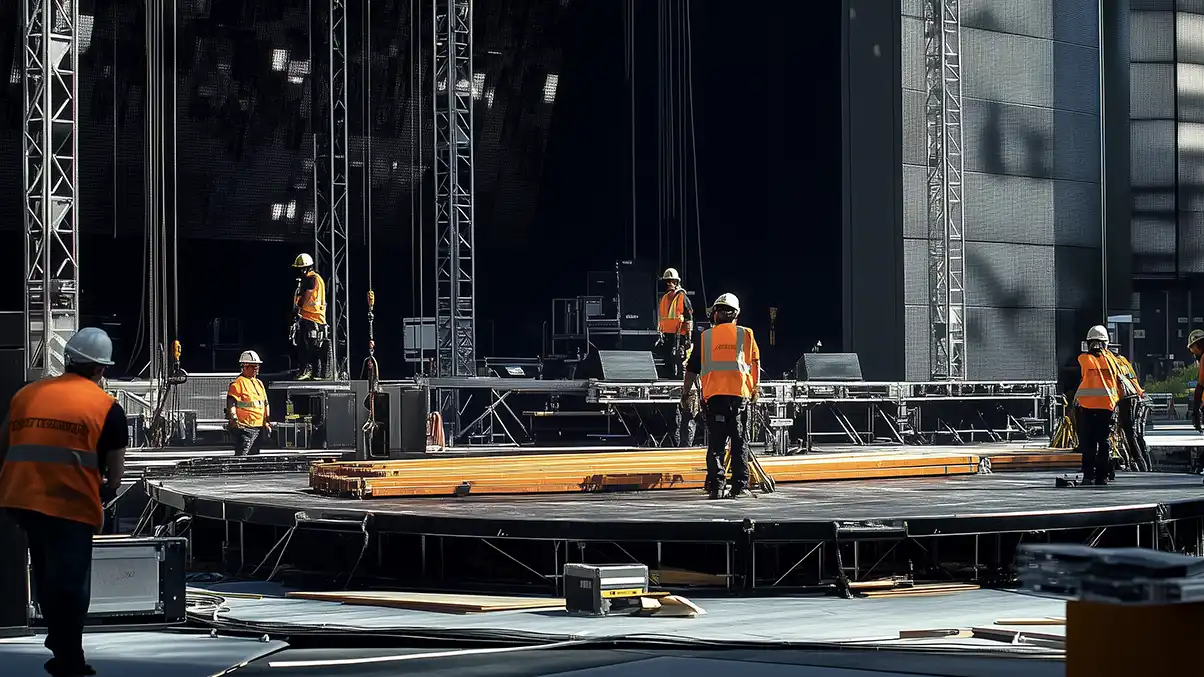
- High production costs. Constructing and setting up these stages requires specialized equipment, skilled technicians, and considerable financial investment. This makes immersive formats more expensive than conventional stage builds.
- Limited venue compatibility. Because of the circular or enveloping layout, these stages demand venues with specific spatial characteristics. As a result, they are typically limited to larger venues or high-budget productions, which can restrict accessibility for some artists.
- Technical complexity. Synchronizing real-time visuals, spatial audio, moving platforms, and lighting across a full immersive environment requires a large, highly skilled production team. Any technical failure is immediately visible from every angle.
- Longer setup and rehearsal times. The complex nature of these setups means more time is needed for installation, calibration, and rehearsal compared to a standard front-facing stage.
Despite these challenges, the increasing availability of concert stage design 3D solutions is making these innovations more feasible for a broader range of events. As for 360 stages, they’re becoming more and popular because of their clear advantage over front-facing stages: the audience likes that, no matter which seat they pick, they’ll be able to fully enjoy the act.
Innovations in Stage Design
There are many cutting-edge technologies and techniques shaping the future of live entertainment. As 360-degree concert stages and 3D concert stages are at the forefront of innovative stage design, they’re often blended together to create the ultimate immersive experience. Here are some other stage design trends that can be used in tandem with both 360-degree stages and 3D animation to enhance the visual appeal of live, hybrid, and virtual performances.
Augmented Reality (AR)
One of the most exciting developments is the integration of augmented reality into performances. Modern concerts often use AR elements to offer audiences an additional layer of visual content, accessible through smartphones or AR-enabled devices. This technology adds digital effects on top of the physical stage, blending real and virtual worlds in real time.
Projection Mapping
Using advanced projection technology, stage designers can turn virtually any surface into an interactive, high-definition screen. Projection mapping has proven especially effective for creating 3D backdrops that integrate seamlessly with the physical environment. Walls, floors, props, and even performers themselves become dynamic visual canvases.
Holographic Displays
Holographic technology creates lifelike 3D illusions that appear to float on stage. Artists can perform alongside digital characters, resurrected legends, or fantastical creatures — all rendered in stunning detail.
LED Volume Stages
Massive curved LED walls surround performers with photorealistic digital environments. Unlike traditional green screens, LED volumes provide real-time lighting and reflections that interact naturally with performers, creating a highly convincing 3D concert stage effect visible both live and on camera.
Kinetic and Robotic Stage Elements
The integration of animatronics and robotics is expanding the possibilities of stage design. Robotics can create moving set pieces, rotating platforms, and even robotic characters that interact with performers. The technology opens up new opportunities for dynamic, kinetic storytelling, making it possible for the interactive stage environment itself to respond to the actions of the performers.
AI-Driven Visuals
Artificial intelligence can generate and adapt concert visuals in real time, responding to the music’s tempo, volume, and mood. AI-driven systems make every performance unique — no two shows look exactly the same.
Conclusions
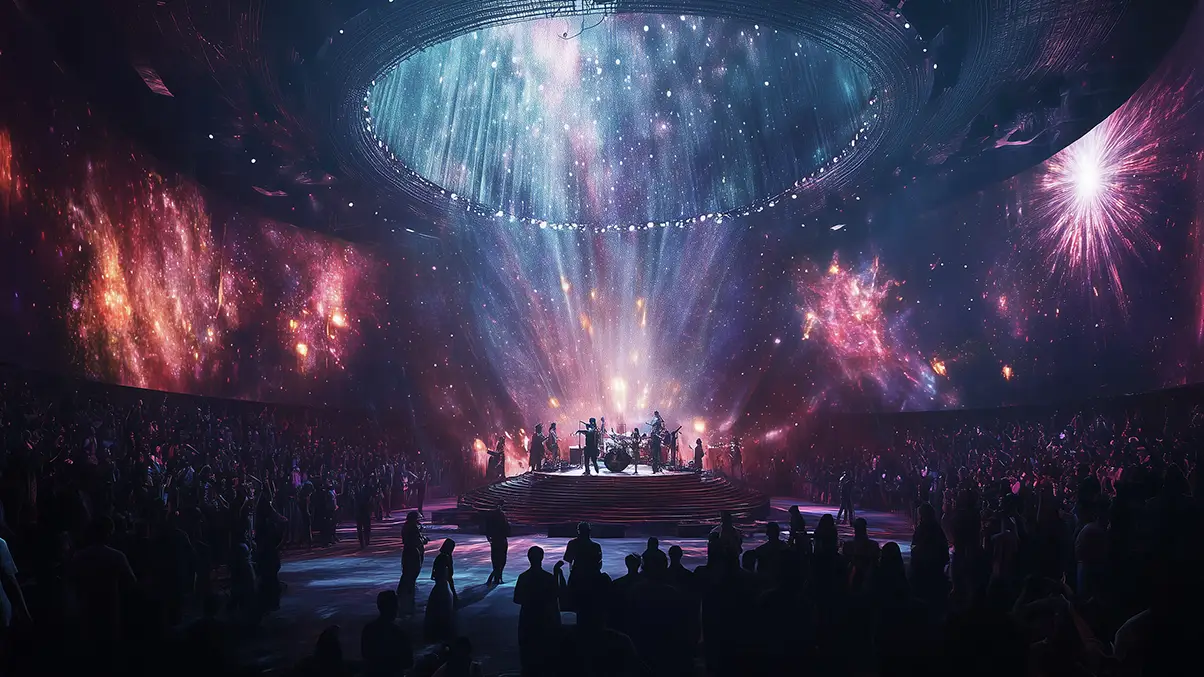
Virtual concert stages represent a groundbreaking shift in how live performances can be experienced. By using virtual reality (VR) and other digital tools, artists can connect with fans around the world, creating interactive stage experiences that go beyond what can be achieved in physical venues.
FAQ
What is a 3D stage?
A 3D concert stage is a performance space that uses 3D-generated graphics as a virtual concert stage to enhance the live performance, often creating a fully immersive environment for the audience.
How do 3D concerts work?
3D concerts employ immersive technologies such as 3D projections, virtual reality (VR), or augmented reality (AR) to create an interactive stage experience for the audience. These performances can include holograms, special effects, and digital visual enhancements.
What is a normal concert stage?
A traditional concert stage typically features a rectangular design with a main performance area, side wings for equipment, and a roof structure for mounting audiovisual systems. The audience views the performance from a fixed, forward-facing angle.
How long is a concert stage?
A medium-sized concert stage, capable of supporting 7-10 performers, typically measures around 20 feet by 24 feet (480 sq. ft.) or 6 meters by 7.5 meters (45 sq. meters).
What are the different types of stages?
There are various traditional stage types, including proscenium stages with an architectural frame, thrust stages where the audience surrounds the performance on three sides, and arena stages where performers are positioned in the center of the audience. Other types include end stages, which resemble proscenium stages but lack an arch.
