


Is personalized online education possible at scale without draining faculty resources? Traditional e-learning platforms struggle with student engagement and language barriers. In addition, they can’t provide individualized feedback to each learner simultaneously. AI avatars for education solve this issue. They become tireless virtual instructors that teach, coach, and adapt to individual learning styles.
Best AI Avatars for Education
Professional avatar designers make specialized avatars for different educational objectives. The process of making an avatar consists of training natural language processing models, creating animation using motion capture, and integrating adaptive learning algorithms. AI avatars for education can be deployed across learning management systems, mobile apps, and VR environments.
Virtual Instructor Avatars
Virtual instructor avatars deliver educational content from introductory concepts to advanced topics. These avatars are trained on educational data bases to gain the necessary expertise. They’re also multilingual, which is perfect for international programs or educational institutions that plan to scale abroad, and adapt to each student’s learning pace. Universities commonly use these features for asynchronous online courses where students learn independently.
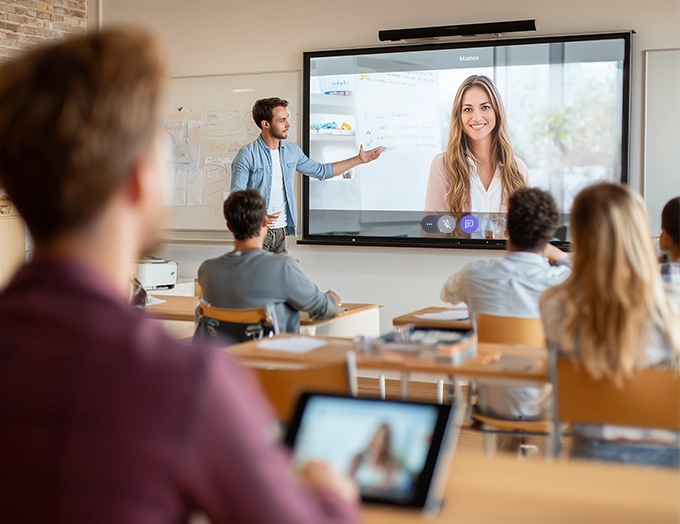
There’re already real cases of educators making a digital copy of themselves. The people behind Foundations of Generative AI did just that. With a goal of helping to democratize online learning, they designed a three-week course where a digital avatar of one of the founders acted as a lecturer.
Best for: Asynchronous online courses, global student populations, scaled instruction across multiple languages.
AI Tutoring Avatars
AI tutoring avatars provide personalized one-on-one academic support. These avatars assess student knowledge gaps through diagnostic questioning, explain concepts using multiple approaches, provide examples and practice problems, and even encourage and motivate students. The system operates 24/7 so students get help whenever they study.
Some medical school students already benefit from tutoring avatars. This technology is incredibly useful for anatomy studies, clinical reasoning practice, and doctor-to-patient communication training. Students work through medical simulations with avatars playing patient roles, receive immediate feedback on diagnostic decisions, and repeat scenarios until mastery. This provides unlimited practice hours impossible with human standardized patients or even human, professionally trained actors.
Best for. STEM subjects requiring problem-solving practice, medical education clinical scenarios, individualized academic support.
Language Learning Conversation Partners
Language learning avatars engage students in natural conversations to help them practice speaking. These avatars can adjust dialogue difficulty, correct pronunciation and grammar in real-time, introduce vocabulary contextually through conversation, and provide cultural context for idiomatic expressions. Students practice speaking without fear of judgment from human peers or teachers.
Beyond foreign language acquisition, corporate training programs use conversation avatars for business language instruction and presentation practice. That way, users get to receive immediate feedback on their communication effectiveness, and repeat scenarios over and over again. The avatars can also help business teams learn appropriate region-specific business etiquette to ensure communication with clients always goes smoothly.
Best for: Foreign language acquisition, business communication training, pronunciation and fluency development.
Soft Skills Training Avatars
Soft skills training avatars simulate realistic workplace scenarios for communication practice. These avatars can play difficult customers, challenging colleagues, job interview panels, and public speaking audiences, helping users learn to better handle challenging situations. They respond dynamically to learner behavior with appropriate emotional reactions, escalate conflicts based on learner choices, and provide detailed feedback on communication effectiveness.
One study showed that VR training with avatar interactions helped managers better communicate their emotions to their employees, leading to more empathetic and clearer communication. Corporate L&D departments deploy this technology for sales training, leadership development, conflict resolution practice, and customer service excellence programs. This helps employees practice in a safe environment without fearing real-world consequences.
Best for: Corporate soft skills training, sales and customer service, leadership communication, interview preparation.
Assessment & Exam Preparation Avatars
Assessment avatars assist students with exam preparation. They adopt questions to student knowledge level, provide detailed explanations for incorrect answers, identify recurring weak areas, and track progress over time with comprehensive analytics. They also create customized study plans targeting the discovered knowledge gaps.
Professional certification programs use assessment avatars to evaluate exam readiness. Students complete practice tests under realistic conditions, receive detailed performance analysis with improvement recommendations, and repeat assessments tracking readiness scores. The adaptive testing identifies precise knowledge boundaries more efficiently than static exams.
Best for: Standardized test preparation, professional certification training, continuous student assessment, knowledge gap identification.
Avatars for Education: Choosing the Optimal Strategy
To choose the right avatar solution for your project, you need to consider your educational objectives, student populations, and technical infrastructure.
- Course objectives and outcomes. Do you want your avatar to deliver accurate knowledge to students, help them practice challenging scenarios, or point out growth zones? The goals you want to achieve will determine the technological build of your avatar.
- Student technical access. If you have equipped labs available, VR can be a great solution for immersive learning sessions. Mobile apps and web platforms are better suited for low-bandwidth regions or institutions with limited budgets. Choosing multiple access methods will make sure your solution reaches as many students as possible.
- Faculty integration. Avatars can handle repetitive delivery during lectures while faculty focus on mentorship during seminars. Human instructors can be trained on avatar capabilities so that they can use them to their full capacity while designing the curriculum.
- Scalability and growth. When it comes to large institutions, systems powering AI avatars must scale from thousands of students without quality loss and accommodate for multilingual audiences. Planning for future needs can help you avoid costly migration as you scale.
- Privacy and compliance. Secure LMS integrations and compliance with governance policies and regulations such as FERPA and GDPR is essential for ensuring student and educator data stays protected.

Final Words
AI avatars in education can help institutions achieve higher student engagement and, better knowledge retention and learning outcomes compared to traditional instructional methods. Moreover, digital tutors and instructors help students from less developed regions access the same high quality knowledge as their peers in other parts of the world. This technology reduces faculty workload while improving student satisfaction and accelerates skill development while reducing costs. What used to be possible only through expensive one-on-one tutoring is now accessible to anyone with internet connection.
FAQ
What subjects work best with AI avatar instruction?
AI avatars excel in STEM subjects requiring problem-solving practice, language learning needing conversational practice, medical education using clinical scenarios, and soft skills training with workplace simulations. Nearly any subject involving factual knowledge, skill practice, or language development adapts effectively to avatar instruction.
How do educational avatars adapt to different learning styles?
Advanced avatars analyze student responses identifying comprehension patterns and preferred approaches. Visual learners receive more diagrams, verbal learners get detailed explanations, and kinesthetic learners in VR interact physically with content. The system tracks which explanation styles work best for each student and adjusts accordingly.
Can AI avatars replace human teachers?
No. Avatars augment rather than replace educators. Avatars handle repetitive tasks like content delivery and common questions, freeing teachers for mentorship, creative guidance, and emotional support. The optimal model combines AI efficiency with human empathy.
What age groups benefit from AI avatar learning?
Avatars serve learners from elementary school through professional development. Young students use avatars for literacy practice, university students for subject tutoring, corporate professionals for skills training, and senior learners for continuing education. Technology adapts to any age through appropriate content design.
Do students know they’re interacting with AI?
Most institutions clearly identify avatars as AI-powered instructors to set appropriate expectations. Research shows student satisfaction remains high with full transparency because focus is educational effectiveness. Consistent availability, immediate feedback, and personalized attention generate positive experiences.
