


Introduction
In an era where healthcare education is rapidly evolving, artificial intelligence is taking center stage. These technologies are reshaping how clinicians train and learn. In this article, we’ll explore the rise of AI-powered medical simulation. We’ll talk about how it intersects with health education innovations like AI avatars and why it matters for both trainers and learners in healthcare.

What Is AI-Powered Medical Simulation?
AI-powered medical simulation refers to training tools that use artificial intelligence to mimic clinical situations, patient interactions, and procedural experiences. These systems use machine learning, natural language processing (NLP), and sometimes virtual reality (VR) or augmented reality (AR) to create dynamic, adaptive scenarios that respond in real time to the learner’s actions. They often offer doctor-patient interactions powered by AI, enabling users to practice history-taking and clinical reasoning in controlled settings.
By integrating AI-powered avatars and interactive scenarios, medical simulation now supports not only technical skills but also communication, empathy, and decision-making.
Clinical Applications: Which Medical Specialties Benefit Most from AI Medical Simulation?
AI-powered simulation is versatile and offers benefits across many specialties:
- Surgery and procedural disciplines. AI‐enabled VR or AR simulations allow surgical trainees to practice procedures without patient risk, refine motor skills, and receive automated feedback.
- Radiology and imaging. Trainees can use virtual platforms to interpret scans, explore anatomy, and practice diagnostics in simulated environments.
- Communication-heavy specialties (primary care, psychiatry, nursing). Medical AI avatars simulate patient encounters and emotionally loaded scenarios, helping clinicians develop soft skills and cultural competence.
- Interprofessional education and team-based care. Simulations let medical, nursing, and students in other health-related disciplines practice team communication, workflows, and crisis resource management in realistic settings.
In short, any specialty where decision-making, interactions, and adaptability matter can benefit from AI-powered medical simulation.

How AI Medical Simulation Improves Patient Safety and Reduces Clinical Errors
One of the biggest advantages of virtual medical simulation is its impact on patient safety and error reduction.
- Risk-free repetition
Learners can practice procedures, communication and diagnostics repeatedly without placing real patients at risk.
- Consistent feedback and assessment
AI systems monitor performance and communication style, providing immediate, objective feedback and tracking progress over time.
- Standardisation and equity
Because AI simulations can be replayed consistently with their content staying the same, all learners receive accurate information and standardized training.
- Bridging gaps in real-world experience
In specialties where student-to-trainer ratios are low or case mix is limited, simulation can fill in some of the gaps.
All these features combined mean that when students become actual practicing medical specialists, they’re better prepared for the challenges of real patient care.
AI Simulation vs. Traditional Medical Training Methods
Traditionally, medical training includes acquiring theoretical knowledge through formats like textbooks and lectures in combination with practice during supervised clinical rotations or with human actors. In comparison to older methods, AI-powered virtual medical simulation offers several advantages, delivering both theoretical and practical knowledge in an engaging and effective way.
| Traditional Methods | AI-Powered Simulation |
| High reliance on human instructors and actors (costly, scheduling constraints) | Scalable, repeatable, accessible anytime, anywhere with AI avatars or virtual patients |
| Often fixed case-mix, limited repetitions | Tailored, adaptive scenarios that respond in real time to learner actions |
| Feedback may be delayed or subjective | Immediate, data-driven feedback and analytics on performance |
| Access and equity challenges in underserved regions | Web-based, lower-cost simulation accessible across settings |
That said, traditional methods are still valuable. Hands-on patient care, real human variability and the development of clinical judgment are essential parts of medical education. AI medical simulation doesn’t replace these foundational elements — it complements them.
Scalability: How AI Enables Medical Training for Healthcare Workforce Shortages
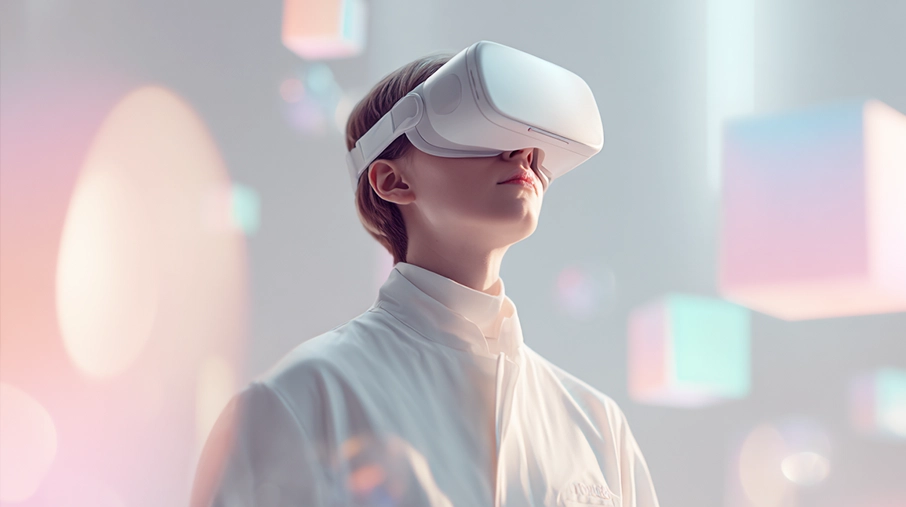
Healthcare systems globally face workforce shortages, uneven training access and pressure to scale competencies quickly. In the post-COVID-19 age, the world has realized that only relying on systems that require physical presence to function — be it grocery shopping or in-person education — can carry risks. AI-powered simulation helps navigate these challenges by:
- Lowering per-learner cost: Develop a virtual medical simulation only once and bear its benefits continuously, saving resources on paying instructors. A small license fee is incomparable to the salary of a full-time lecturer or actor.
- Enabling remote and asynchronous learning: Learners can access simulations anytime from anywhere. This means that all students, no matter their life schedule or time zone, can train using the medical simulation online platform.
- Providing consistent training across institutions: AI medical simulation training platforms ensure that learners in rural or under-resourced settings receive the same quality and frequency of practice as those in major centers.
- Facilitating onboarding and competency acquisition: Hospitals can accelerate staff training, practice OSCE-style scenarios and help newly hired or internationally trained clinicians become ready for real-life practice faster.
In short, AI simulation turns limited training resources into high-quality learning pipelines.
AI Simulations: Challenges and Ethical Considerations
While AI-powered biomedical simulation has high potential, the adoption of this technology is still in its early stages. To implement these tools responsibly and effectively, educators, institutions and healthcare systems must address the existing barriers and ethical issues.
-
Technological Infrastructure & Cost
Many medical simulation training platforms require robust hardware (VR headsets, advanced computers, high-speed internet), and in some cases, custom software integration. Although web-based simulations reduce hardware demands, deploying fully immersive VR/AR solutions is still a serious investment. Smaller hospitals or training institutions may lack the budget or technical support. For example, a report noted that although many biomedical simulation platforms exist, they’re still largely not accessible in most low-resource settings.
-
Accuracy, Validation & Trust
For virtual medical simulation, accuracy of scenario content, anatomical modelling, clinical logic and feedback is essential. If AI medical simulation provides misleading or incorrect guidance, there’s a risk of propagating poor habits. Some systematic reviews caution that while AI simulations improve many skills, non-AI groups performed better in certain manual skills (e.g., CPR compression depth). Healthcare educators must ensure that AI models are validated, reviewed by human experts, and transparent about what they can and cannot replicate.
-
Ethical, Legal & Liability Issues
When AI is involved in simulation and potentially in real-world training, questions of liability arise. Who is responsible if a learner trained via simulation makes an error in practice? Are simulated patients modeled from real people, and is patient privacy respected? In the context of simulation, ethical frameworks must guide data collection, user privacy and the simulation’s scope.
-
Integration within Curriculum and Faculty Training
Deploying AI simulations isn’t just about installing software. It requires curriculum redesign, educator training, and alignment with competency standards. Faculty must learn how to interpret simulation analytics, debrief students effectively, and integrate simulation outcomes with clinical rotations. Without thorough integration, simulation risks becoming an obstacle to efficient knowledge retention. To truly reap benefits, simulation-based medical education must be thoughtfully embedded in the training pipeline.
- Equity & Access
There is a risk that advanced simulation tools widen the gap between well-funded institutions and those with fewer resources. Some research emphasizes that adaptive and asynchronous AI simulation tools can help bridge this gap. To avoid exacerbating inequalities, medical simulation development companies should ensure that their solutions don’t necessarily require complex hardware. For example, mobile and web apps that let you use the medical simulation online platform on any gadget that has a screen are usually more accessible than hardware-specific programs.
Measuring the Impact of AI Medical Simulation: Metrics to Consider
A crucial question for any educational innovation is “How do we measure success?” For AI-powered medical simulation, it’s vital to track the right metrics and outcomes to demonstrate value, guide improvement and justify investment.
Key Metrics to Monitor
- Learner performance improvement: Pre- and post-simulation assessments, error rates in simulation, improvements in decision-making, communication and procedural accuracy.
- Time-to-competency: How quickly do learners reach desired skill levels compared to traditional methods?
- Transfer to clinical practice: Do skills mastered in simulation translate into better performance on real patients? Metrics might include complication rates, procedure times, patient satisfaction, and reduced adverse events.
- Pedagogical outcomes: Learner engagement, retention, satisfaction, and reduction in cognitive load and anxiety when confronted with real-life high-stakes scenarios.
- Operational outcomes: Cost savings (less need for human actors or high-fidelity manikins), scalability (number of learners served), resource utilization, and faculty time saved. An AI medical simulation might reduce faculty workload and let the institution train more learners with the same infrastructure.
Insights for Implementation & Continuous Improvement
- Feedback loops: Use data from medical simulation training platforms to identify performance gaps, refine scenarios, and adapt curriculum.
- Debriefing is critical: Even the best virtual medical simulation must be followed by structured debriefing led by human professionals to help learners reflect on decisions, errors, and improvement.
- Iterative development: Medical simulation training scenarios should evolve based on outcomes, learner feedback and clinical best practices.
- Cost-benefit analysis: Institutions should weigh initial investment against long-term benefits (e.g., improved patient safety, fewer training cancellations, and better workforce readiness).
- Multi-institution collaboration: By sharing scenario libraries, data and best practices, institutions can reduce duplication and improve simulation quality.
In the end, measuring the impact doesn’t just prove that AI biomedical simulation can and should be used in clinician training. It also helps improve its efficiency and find new applications for this technology in broader medical education.
The Future of Medical Education
The future promises exciting developments in AI-powered simulation.
AI avatar patients will become more and more emotionally responsive and human-like. They’ll be able to adapt to cultural contexts and emotional tone in real-time, mirroring human behaviors more closely.
AI avatars in healthcare education are already using voice cloning for personalized communication (for example, in patient education contexts). Medical training may further adopt similar techniques for instructor avatars or virtual mentors.
Web-based, AI-driven virtual medical simulation will enable broader access in low- and middle-income countries, reducing disparities in medical training.
Learners will conduct simulations in immersive 3D VR, AR, and hybrid environments blended with physical tools and patient avatars, leading to enhanced realism and engagement.
As these technologies mature, the blend of AI avatars and medical simulation will redefine how future healthcare professionals are trained — and how patient care quality improves.
Conclusion
AI-powered medical simulation stands at the intersection of technology, education and patient safety. From realistic virtual patients and AI educator avatars to adaptive interactive scenarios, these tools offer scalable, engaging, data-driven training experiences that strengthen traditional medical educational methods.
While challenges remain — such as infrastructure, validation and integration — they represent a transformational shift. As healthcare systems continue to evolve, the fusion of AI simulation and education will play a crucial role in preparing clinicians for a complex, high-stakes world.
FAQ
What is the difference between AI simulation and VR simulation?
VR simulation refers to the immersive environment (e.g., putting on a headset and interacting in 3D), whereas AI simulation adds intelligent behaviors, adaptive feedback and dynamic responses. Some solutions combine both.
Can AI simulation fully replace live patient encounters?
While AI simulation provides safe, consistent, repeatable practice, real patient interaction remains crucial for developing clinical judgment, empathy and experience.
What types of feedback do learners receive from AI medical encounter simulators?
Feedback can include analytics on decision-making, communication style, procedural steps, timing, errors, and areas for improvement. Educators can customize metrics, and learners receive automated reports.
How accessible are AI medical simulation platforms for smaller institutions or low-resource settings?
Web-based, screen-only simulators reduce hardware requirements, making them more accessible options for situations where funding is limited.
What role do AI avatars play in medical simulation and training?
AI avatars serve as virtual patients, simulated healthcare providers, and instructors. They can mimic human behaviors, answer questions, convey emotional cues and personalize interactions, enhancing realism and preparing learners for complex communications.
