


Digital Twins in Healthcare: Improving Medical Decisions with Virtual Patient Analytics
Introduction
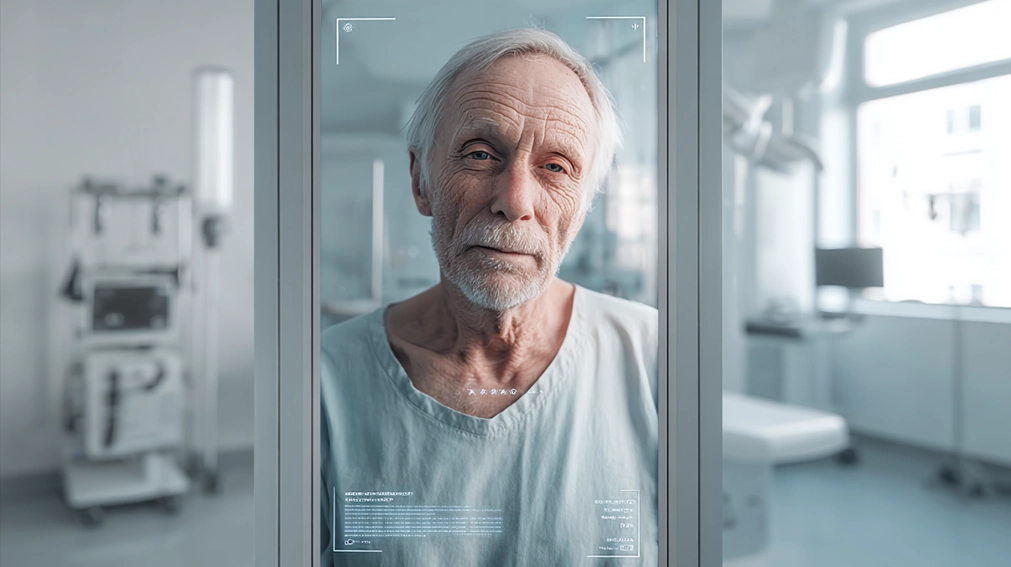
If we were to name the industry that has seen the most change thanks to digitalization, healthcare would probably be at the very top of that list. There are now systems that help safeguard the personal information of billions of patients and AI-powered tools that can diagnose cancer by scanning digital tumor slides. But the innovation doesn’t stop there. We’re seeing a new wave of digitalization in healthcare as AI solutions become more accessible. Recently, more organizations in the industry are experiencing the benefits of virtual avatars, or digital twin technology.
If you’re reading this article, you’re probably wondering how you can implement digital twins in healthcare, or even thinking of creating a virtual assistant for your specific needs. Today, we’ll dive into how AI avatar technology can help healthcare professionals learn essential skills more effectively and deliver better care to patients. We’ll also discuss the software and hardware tools you’ll need to make a digital twin, as well as go over some real-life examples of this technology making a difference in healthcare.
What Are Digital Twins in Healthcare?
Digital twins in healthcare are virtual representations of humans, or avatars, that are used to make medical services more efficient. The main appeal of virtual twins is that they appear more human-like than other digital solutions used in the medical sphere.
Since these digital personalities look almost exactly like humans, people can engage with them on a deeper, more emotional level. The realistic appearance of digital avatars is also an important part of the equation. It ensures that people can connect with digital twins while talking about sensitive topics in a safe environment free from bias, judgment, and prejudice.
But the avatar is just an outer shell. To be truly useful to medical professionals, digital twins need to be integrated with existing systems or databases or powered by tools like generative AI.
Types of Digital Twins in Healthcare
Trying to create a universal type of digital twin that would accommodate every healthcare issue would be like trying to find one cure for every illness. Luckily, digital twin technology can be easily adapted to fit the specific requirements and needs of healthcare providers and their patients.
Virtual mental health assistant
Digital twins can be used to help mental health specialists collect information about patients who struggle with sharing their personal issues.
Research has shown that some people feel more comfortable expressing concerns about their health to digital twins or devices than to real healthcare practitioners. Developers from the USC Institute for Creative Technologies, who created a “virtual therapist” solution called Ellie, tested the digital twin solution on a group of American soldiers who had just returned from a tour of duty. The results were surprising: respondents reported significantly more symptoms of Post-Traumatic Stress Disorder to Ellie than they did on their assessment forms.
Digital patient encounter simulator
Digital twins in healthcare can be used for medical student training. They can act as virtual patients, helping future doctors re-enact realistic healthcare scenarios in a safe and controlled environment. This lets students prepare for real medical encounters without worrying about harming a real human.
In addition, healthcare simulations with digital twins make the learning experience more memorable and interactive. The novelty of this innovative technology, combined with realistic interactions powered by conversational AI, turns static lectures into immersive experiences.
Virtual hospital receptionist
Digital twins can act as hospital receptionists. When integrated with internal systems, they can schedule appointments for patients and match them with doctors who have the necessary qualifications. They can also provide guided virtual tours around the hospital and deliver detailed presentations about services and procedures. An avatar’s friendly and human-like appearance can help ease the anxiety some patients feel in a hospital setting. Digital receptionists can be added to the hospital space in the form of an interactive kiosk, or they can be integrated into a hospital app or website.
Personalized treatment companion
Digital twins can also function as ongoing healthcare companions that support patients outside the hospital walls. By mirroring a patient’s health data in real time, these avatars can remind them to take medications, track lifestyle habits like diet and exercise, and even adjust recommendations based on progress or setbacks.
For example, a patient managing diabetes could have a digital twin that continuously analyzes glucose levels and suggests tailored adjustments to meals or activity. This type of twin not only empowers patients to take more control over their health but also provides doctors with richer, continuous insights that improve treatment plans. In this way, digital twins serve as a bridge between clinical care and everyday life by keeping patients engaged, supported, and better informed.
Digital replica of the human body
While this type of digital twin is different from the others, it’s equally important. In medical publications, the term “digital twins” is often used to describe a replica of a human body, its organs, or even specific cells. While this isn’t a virtual twin in the same way avatars are, they have the same goal — to learn how to provide higher-quality healthcare without risking the safety of patients.
An article titled “Digital Twins in Healthcare: Methodological Challenges and Opportunities” (Meijer, C., Uh, H. W., & El Bouhaddani, S., 2023) mentions several types of digital twins, including an artificial pancreas, cardiac digital twins, and even single-cell digital twins. These virtual copies can help researchers predict illnesses and simulate various situations without harming real people.
Real Examples That Prove This Isn’t Just Science Fiction
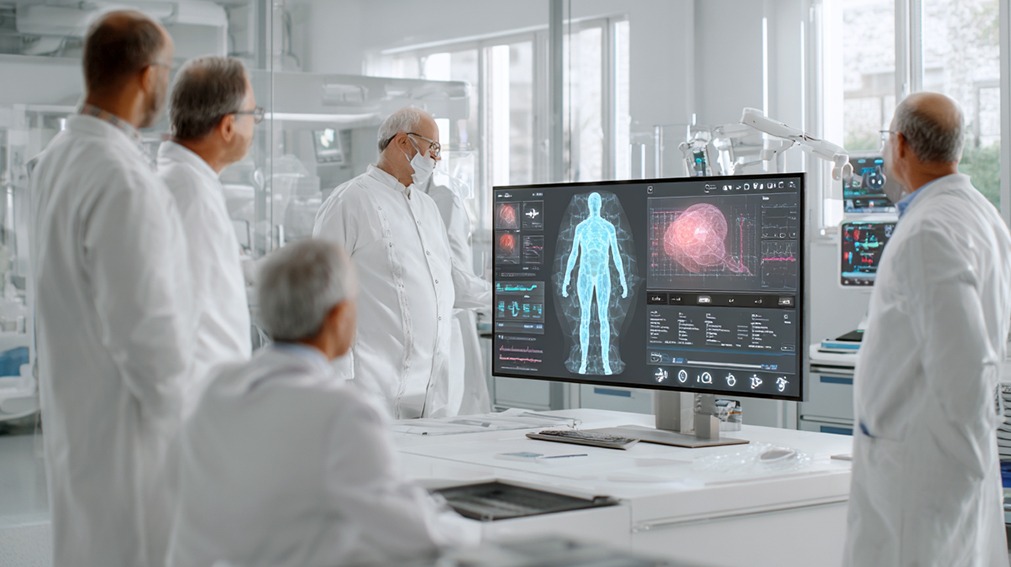
“Digital twins” don’t just exist in the sci-fi world. Various industries, from healthcare and banking to real estate and e-commerce, are already using AI-powered avatars to optimize workflows, automate routine tasks, and improve the quality of services. Here are some real-life examples of how digital twins are already being used to revolutionize healthcare.
Automated VR coach in cognitive therapy for delusions (The Lancet Psychiatry)
The THRIVE clinical trial tested an immersive VR therapy where a virtual coach guided patients with psychosis through graded social scenarios. Results showed this method of intervention was just as effective as VR relaxation therapy. It successfully reduced the distress that delusions caused patients. Digital twins in healthcare have the potential to make psychosis treatment more accessible and scalable.
Nurse-like avatar in telemedicine for heart failure patients (Wiener klinische Wochenschrift)
In a pilot study, heart failure patients used a telemonitoring app featuring a nurse-lookalike digital twin (“Molly”). The digital twin read questionnaires and educational content aloud to patients with limited literacy or visual ability. Over three months, the solution showed high usability and satisfaction. This suggests that digital twins can enhance accessibility and patient engagement in chronic disease telecare.
AI virtual human avatar for mental health self-assessment (Journal of Medical Extended Reality)
The “BeCalm” avatar app helped healthcare professionals complete an AI-driven virtual self-assessment of mental health symptoms like burnout and anxiety. Later versions of the app integrated ChatGPT-4, which allowed for improved conversational feedback. This shows that digital avatars can be used as mental health support and self-reflection tools for clinical staff.
Avatar-based patient monitoring for rapid vital sign recognition
In a simulation study, the Philips Visual Patient Avatar was used to notify medical practitioners of any changes in patient vitals through animated shapes, colors, and movement. This technology is meant to help healthcare providers keep track of vitals during surgery, even while moving across the operating room. The results showed that the digital twin helped anesthesia providers recognize vital sign changes faster than they did with regular monitors.
Virtual patients for empathy and relational training
Four healthcare students at the University of Florida, USA, co-designed digital twins for stroke patient rehabilitation. These avatars were created to provide stroke survivors with personalized, interactive, behavior-change-centric treatment.
Virtual simulation with avatars to train relational competence
Aspiring healthcare professionals had an opportunity to interact with human-controlled digital twins of patients to practice relational teaching skills like empathy and communication attunement. The immersive experience exposed education students to authentic interpersonal scenarios in a safe environment.
How to Actually Build a Healthcare Digital Twin
Now that we’ve covered the basics, it’s time to learn how to create a digital twin for healthcare. We’ll go through the essential elements of the process of building a digital twin from scratch so that you feel ready to embark on your own journey.
1. Defining Purpose & Scope
Each project starts with defining goals and purposes. Decide what you want to create a digital twin for: real-time patient monitoring, therapeutic simulation, personalized treatment planning, or surgical rehearsal. Market research is incredibly important during this stage. You need to identify a need that hasn’t been met by anyone else. Then, you can start designing a solution that fills that gap.
2. Data Acquisition: Sensors to Systems
Depending on your purpose, you might need sensors—devices that capture environmental or physiological changes in real time. For a healthcare avatar, you might need to track vitals like pulse, blood pressure, or glucose levels, which are then encoded, processed, and stored in a database.
3. Modeling & Virtual Representation
To create a digital twin model, use tools such as Unity, Blender, AutoCAD, or Matlab/Simulink. You can design realistic representations of humans, their organs, and physiological systems. Physics-based models may also be integrated with simulation engines. Once built, you’ll need to validate the model’s outputs against real-world patient data and refine it to ensure it accurately mirrors how the real patient’s body behaves.
4. Real-Time Connectivity and Synchronization
Use IoT gateways, edge computing, and cloud platforms to keep patient data flowing seamlessly. This reduces delays and keeps the digital twin perfectly in sync with the patient in real time.
Set up data exchange not only from the patient to the digital twin but also—when possible—from the twin’s insights back into clinical decision-making.
5. Intelligence: AI, Simulation, and Predictive Analytics
- AI, ML, and Big Data Applications
Leverage machine learning, advanced analytics, and large-scale datasets to deliver predictive insights. This enables modeling of disease progression, forecasting treatment outcomes, and simulating responses to different interventions before they are applied in practice. - Simulations and Virtual Testing
Use digital twins to run controlled “what-if” scenarios—such as testing drug dosages, evaluating surgical techniques, or exploring therapy responses—minimizing clinical risk while accelerating decision-making.
6. Visualization & User Interface
- Intuitive Interfaces with XR Tools
Provide clinicians with access to digital twins through interactive dashboards, AR/VR solutions, or immersive visualization platforms. These interfaces make complex physiological changes easier to understand and support more informed, real-time decision-making.
7. Deployment, Monitoring & Continuous Improvement
- Deployment & DevOps Practices
Adopt CI/CD pipelines and DevOps workflows to streamline deployment, monitor system performance, and continuously refine twin models with incoming data. - Patient Engagement and Consent
Ensure compliance and trust through robust data governance frameworks, including encryption, access controls, and transparent patient consent mechanisms that clearly explain how digital twin data is used and updated.
8. Governance, Ethics & Scalability
- Legal, Ethical, and Security Considerations
Maintain compliance with privacy and regulatory frameworks (HIPAA, GDPR, etc.), establish clear data ownership guidelines, and build auditable, secure systems to safeguard patient information. - Infrastructure & Scalability
Utilize scalable cloud-native infrastructure and microservices architecture, with edge computing to support latency-sensitive applications. Account for cost, computational resources, and operational scalability in enterprise adoption.
Conclusion: Digital Twins Are Here to Stay
Hopefully, this helped shed some light on the reasons behind the growing popularity of digital twins in the healthcare market. As the industry faces increasing demands for efficiency, personalization, and innovation, digital twins stand out as a transformative solution. They give providers and educators the ability to consistently deliver high-quality care while keeping pace with the rapid changes of today’s world.
More than just a technical upgrade, virtual healthcare avatars represent the next step in making care both smarter and more human. They blend advanced AI, real-time data, and immersive simulation with a patient-centered approach, bridging the gap between cutting-edge innovation and compassionate healthcare. In many ways, they embody the future of medicine: technology that not only enhances clinical decision-making but also makes healthcare more accessible, personalized, and resilient.
FAQ
What exactly is a digital twin in healthcare?
A digital twin in healthcare is a virtual model of a patient, organ, or medical system built using real-world data. Think of it as a “living simulation” that mirrors the physical version it represents. For example, a hospital could create a digital twin of a patient’s heart to test how different medications or surgical approaches might affect them before applying anything in real life. This makes care safer, more personalized, and often more cost-effective.
How do digital twins differ from traditional medical records?
Medical records store past data like diagnoses, test results, and treatments—essentially a snapshot of what has happened. A digital twin, on the other hand, is dynamic. It continuously updates in real time with new data and can even simulate future outcomes. While a medical record might list that a patient has diabetes, a digital twin could simulate how changes in diet, exercise, or medication will impact that patient’s blood sugar over the next six months.
Are digital twins the same as AI in healthcare?
Not exactly. Digital twins often use AI and machine learning to process massive amounts of data, but they are broader systems. They combine data integration, simulation, and predictive modeling. In other words, AI is a tool inside the digital twin “toolbox.”
What data is needed to create a healthcare digital twin?
Creating a digital twin can require various data sources depending on its purpose. Among them are medical imaging (MRI, CT scans), lab results, electronic health records, wearable device data (heart rate, sleep patterns), genetic information, and lifestyle data such as diet or exercise habits. For example, a cardiac digital twin might combine MRI scans of the heart with real-time ECG data from a smartwatch to provide doctors with a detailed, up-to-date view of heart function.
How accurate are digital twin predictions for patient health?
Accuracy depends on the quality and quantity of the data available. While digital twins can provide detailed simulations, they are not perfect. The more data fed into the twin, the closer its predictions get to reality.
Can digital twins replace doctors in making medical decisions?
No. Digital twins are built to support, not replace, healthcare professionals. They provide insights, predictions, and simulations, but it’s doctors who interpret the results and make the final decisions.
