

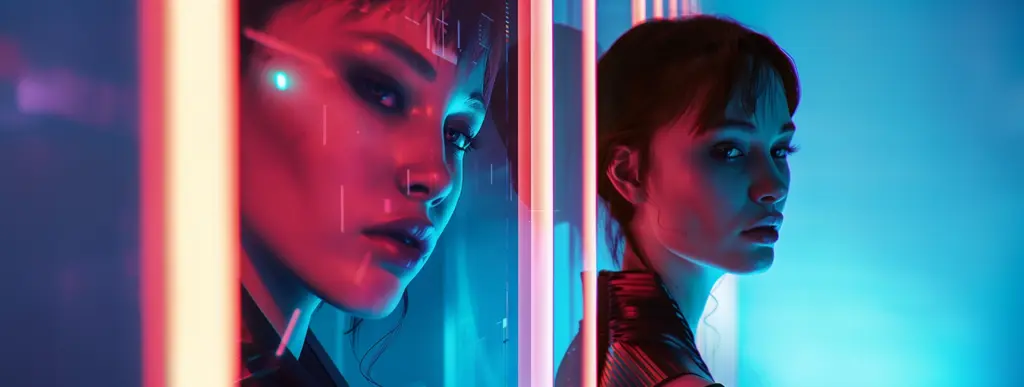
The battle for brand budgets has begun — and it’s human vs. AI.
AI avatars and human influencers now compete for the same dollars, yet they solve entirely different problems. As the virtual influencer market hits $8.3 billion in 2025 and accelerates at 38.4% annual growth, brands are recognizing something powerful: a digital influencer can outperform a human one in several categories, including productivity, compliance, and brand loyalty.
What Are AI Influencer Avatars
An AI influencer avatar is a digital persona powered by artificial intelligence that represents a brand across social media, events, and customer-facing channels. Unlike static mascots, modern AI avatars use natural language processing, voice synthesis, and real-time animation to interact with audiences the way a human influencer would — but without the risks associated with managing real people.
The solutions present today range from fully fictional characters to digital twins, which are AI-driven replicas of real people. These virtual influencers are earning their management companies big money. Fully digital personalities regularly partner with big name brands and gather millions of followers on social media, earning their management companies a fortune in both brand awareness and real money. Lil Miquela, who is considered the most recognized virtual influencer, has over 2.3 million Instagram followers and has collaborated with Prada, Calvin Klein, and Samsung.
AI Avatars vs Human Influencers: Direct Comparison for Brand Marketing
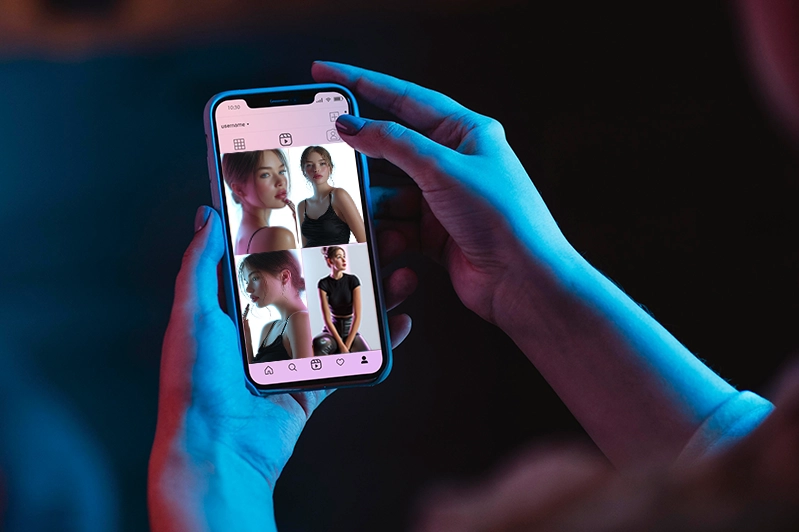
AI avatars outperform human influencers in consistency and control. While human influencers might retain an edge in emotional authenticity and organic trust, there’s already been proof of brands successfully closing these gaps via strong marketing strategies and well-thought our messaging.
The main difference is obvious: an AI avatar influencer is a programmable tool that can be tailored to fit your exact needs and goals, while a human influencer is unpredictable.
| Factor | AI Avatar Influencer | Human Influencer |
| Availability | 24/7, no downtime, can’t quit | Limited by schedule and time zones |
| Message control | 100% brand-aligned | Subject to personal opinion and PR risk |
| Scalability | Unlimited platforms, languages | One person, one location |
| Engagement rate | 2.84% average (vs 1.72% human) | Higher trust-based loyalty |
| Content speed | Instant generation and iteration | Requires production time |
| Emotional authenticity | Can be perceived as synthetic but can be improved via strategic marketing | Genuine lived experience |
| Cost structure | High upfront, low marginal | Ongoing per-campaign fees |
Virtual influencers achieve engagement rates roughly 3x higher than their human counterparts — 5.9% vs 1.9% in campaign contexts. However, sponsored posts by human influencers still generate 2.7x more engagement than AI equivalents, suggesting that audiences interact with virtual influencers out of curiosity but convert on trust built by real people.
Scalability: How AI Avatars Enable Multi-Platform Brand Communication at Scale
AI avatars are a brand communication tool that can operate across every platform, language, and time zone simultaneously. This is the core advantage that no human influencer partnership can replicate.
One single AI avatar can post to Instagram, host a live TikTok session, appear as a holographic greeter at a trade show, and run customer support on a website — all at the same time. Digital twins of brand executives can deliver keynotes in several languages within the same hour. This scalability is why over 60% of brands have already incorporated virtual influencers into their campaigns.
Creating and Implementing AI Influencer Avatars for Your Brand
Building an AI influencer avatar usually consists of five steps: defining the persona, creating the visual identity, integrating the AI engine, training on brand knowledge, and deploying across channels.
Step 1: Persona design
At this stage, the avatar’s personality, tone, age, visual style, and target audience are defined. A luxury fashion brand will need a different digital twin than a B2B medtech company. The persona determines everything downstream.
Step 2: Visual creation
Then, 3D artists build the avatar. For photorealistic results, studios use motion capture to record facial expressions and body language, then rig the model with a virtual skeleton.
Step 3: AI integration
A conversational AI model is connected to the avatar so it can respond to audience questions, remember interaction history, and generate contextual dialogue. Voice synthesis matched to the avatar’s identity completes the illusion of a real influencer.
Step 4: Brand training
This means feeding the AI avatar your product data, FAQs, brand guidelines, and messaging frameworks. The avatar influencer should answer like your best human salesperson, not a generic chatbot.
Step 5: Multi-channel deployment
During this stage, the avatar is finally launched across various platforms, be those social media, the company’s website, event kiosks, or customer support channels. Companies like Digital Residency that provide enterprise-grade solutions may offer deployment across web, mobile, kiosks, and game engines with offline capability.
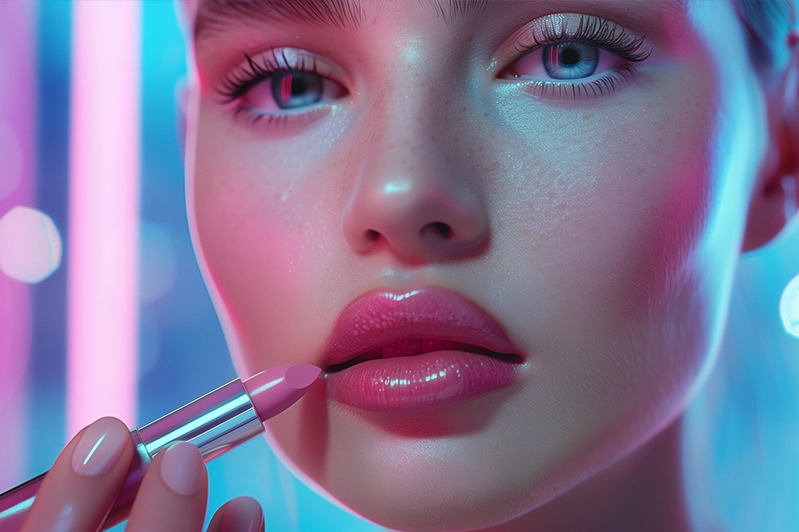
[Иллюстрация: AI-аватар-инфлюенсер держит в руках виртуальную помаду]
Authenticity, Trust, and Audience Perception of AI Avatars and Influencers
Human influencers still hold the trust advantage — but the gap is closing. Nearly 46% of Gen Z consumers express greater interest in brands that use AI-powered influencers, and 52.8% of marketers believe virtual influencers will significantly shape the future of marketing.
The authenticity challenge is real. AI avatars don’t have lived experiences, genuine emotions, or personal stakes in the products they endorse. And audiences know this — that’s why 43.8% of marketing professionals express concerns about AI influencer transparency.
However, this “authenticity gap” matters less in certain use cases. When businesses need consistent product education, multilingual support, or 24/7 event engagement, emotional authenticity isn’t as important as reliability. A digital twin avatar that answers every question correctly at 3 AM delivers more value than a human influencer who is unavailable due to time zone differences. That’s not to mention the fact that a lot of human influencers also lack that highly valued “relatability”, with multimillionaire online celebrities actively showcasing their wealth and status, drifting further and further from what a regular person’s lifestyle looks like.
Some brands opt for a strategy that combines both approaches: use human influencers for trust-building and AI avatars as an always-on, easily customizable communication tool. For example, this Calvin Klein campaign featuring Bella Hadid and Lil Miquela campaign is a perfect example of a virtual human and real one working in tandem.
The Future of Brand Communication: Strategic Implications and Emerging Trends
Key trends shaping the next two to three years:
- Hybrid campaigns: brands combine human influencers with AI avatars, creating a two-layer strategy.
- Real-time personalization: AI avatars adapt messaging based on viewer demographics, behavior, and language in real time, becoming an almost autonomous tool for influencer marketing.
- AR integration: virtual influencers appear in physical retail spaces through augmented reality, guiding shoppers with personalized recommendations.
- Digital twin executives: CEOs and brand leaders create AI digital twins that represent them at events, webinars, and customer interactions when the real person is unavailable.
The brands that will lead are those deploying AI avatars not as gimmicks but as permanent communication infrastructure — digital employees that work across every touchpoint, language, and hour.
Conclusion
AI avatars and human influencers are not interchangeable. Human influencers build emotional trust that no AI avatar can fully replicate today, while AI avatars deliver scalability, consistency, and cost efficiency that no human can match. The winning strategy combines both human influencers for relatability and trust-building and AI avatars for scaling it across every customer touchpoint. The future of brand communication belongs to organizations that integrate AI avatars into their digital and influencer marketing strategies.
FAQ
An AI influencer avatar is a digital persona powered by artificial intelligence. It uses 3D visuals, voice synthesis, and conversational AI to interact with audiences on social media, websites, and live events — functioning like a human influencer but with full brand control and unlimited scalability.
Can AI avatars replace human influencers?
While AI avatars excel at scalability, consistency, and 24/7 availability, they can hardly compete with human influencers in terms of emotional authenticity. The most effective brand strategies use both human influencers and AI avatar tools.
What is a digital twin in influencer marketing?
A digital twin is an AI-powered replica of a real person — typically a CEO, brand ambassador, or public figure. The twin replicates the person’s appearance, voice, and personality, allowing them to appear at events, deliver presentations, or interact with customers when the real person is unavailable. Digital twins offer the credibility of a known individual with the scalability of AI technology.
Do AI influencer avatars actually drive engagement?
Yes. Studies show that both virtual influencers and human influencers can achieve similar engagement rates. What really matters is the content the audience sees fits their views, interests, lifestyle, and personality.
Which industries benefit most from AI avatar influencers?
Fashion, beauty, and lifestyle lead avatar influencers adoption, but AI avatar solutions are expanding into healthcare, banking, real estate, education, and corporate training.
