


AI event marketing automation transforms how exhibitors capture, qualify, and convert leads at trade shows and conferences. With 80% of trade show leads never receiving follow-up and 88% of business cards thrown away within a week, manual methods are failing at scale. This guide shows how conversational AI avatars automate the entire lead capture pipeline — from first greeting to CRM-synced qualification — so your team converts more prospects into revenue.
Why Manual Event Lead Capture Is Costing You Sales and Missing Crowds
Manual lead capture is the single biggest revenue leak in event marketing today. The numbers are staggering: exhibitors invest $10,000–$30,000+ per booth, yet only 6% of marketers are confident in their company’s ability to convert trade show leads into actual revenue. The disconnect between event investment and results comes down to human limitations that no amount of training can solve.
Consider the typical trade show scenario. Your booth staff can handle 3–5 meaningful conversations per hour. During peak traffic, dozens of qualified prospects walk past with no one available to engage them. When staff do connect, they’re busy hurriedly typing in notes or tapping badge scanners that capture a name and email — with zero context about what the prospect actually needs.
The cost compounds at every stage:
- Missed conversations: A 10×10 booth with 3 staff members physically cannot engage more than 15–20 people per hour, even at a high-traffic expo.
- Lost context: Badge scans capture contact data but not buying signals, pain points, or product interest — the information sales teams actually need.
- Delayed follow-up: Leads contacted in the first 5 minutes convert 8x higher than those reached after 30 minutes; manual processes make this impossible at scale.
- Data decay: 90% of manually captured leads never reach the CRM, turning your event spend into a write-off.
| Manual Process | Failure Point | Revenue Impact |
| Badge scanning | No conversation context captured | Sales team sends generic follow-up, prospect ignores |
| Paper forms | Illegible handwriting, incomplete data | 90% of leads never entered into CRM |
| Staff conversations | Limited to 3–5 per hour per person | 70%+ of booth visitors leave unengaged |
| Post-event follow-up | Average 3–5 day delay | 50% of buyers choose the first vendor to respond |
This is not a staffing problem — it’s a systems problem. And it’s exactly where AI in event marketing delivers its greatest impact.
How Conversational AI Avatars Automate Event Lead Capture and Qualification
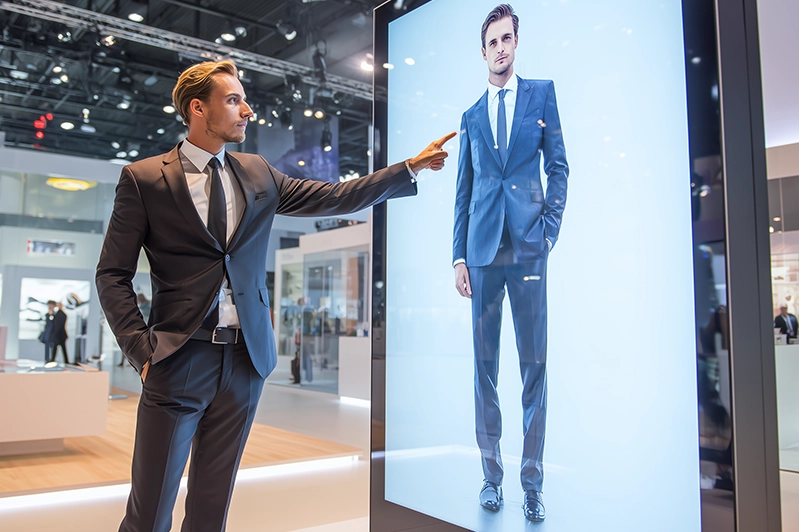
Conversational AI avatars eliminate every bottleneck in the manual lead capture pipeline by engaging visitors through natural dialogue, qualifying them in real time, and syncing enriched lead profiles directly to your CRM. This is AI powered event marketing at its most practical: an always-on tool that never misses a prospect and never loses context.
Here is how automation works step by step.
Step 1: Instant engagement
The AI avatar greets every visitor at your booth — on a Holobox, kiosk, or mobile screen — and initiates conversation within seconds. Unlike static displays or waiting for staff availability, the avatar creates an immediate personalization touchpoint. For example, Digital Residency deploys brand ambassador avatars across Holoboxes and kiosks at major expos. These digital representatives greet, inform, and capture leads simultaneously while human staff handle deeper conversations at a later stage of the funnel.
Step 2: Conversational qualification
Rather than asking visitors to fill out a form, the avatar holds a natural conversation with them. It identifies the company where the visitor is from, their budget authority, purchasing timeline, as well as specific pain points through targeted dialogue. Companies using AI-driven conversational qualification report up to 80% reduction in manual follow-up tasks and significantly higher lead quality.
Step 3: Real-time CRM sync
Every data point from the conversation is pushed directly to your system during the interaction. No more manual entries of post-event CSV exports. Your sales team can now receive pre-qualified leads with full context — long before the event day ends.
Step 4: Intelligent routing
When the avatar identifies a high-value prospect — say, a VP of Operations with an active budget and 90-day timeline — it immediately alerts your on-site team and suggests scheduling a personal meeting. The AI handles first-touch engagement and qualification, and humans take on the follow-up conversations and close the deal.
Step 5: Multilingual personalization
At international events, language barriers can be not just inconvenient but damaging to your overall event ROI. Why should you lose a great deal just because the prospect doesn’t speak your language? AI avatars detect attendee language from the initial greeting and conduct the entire qualification in it. This capability makes generative AI for marketing events particularly powerful at global trade shows where attendees arrive from all over the world.
Implementation Roadmap: From Pilot to Full Event Automation

Deploying AI at your events is easier — and quicker — than you might think. The most effective approach is a phased rollout. This entails starting small and testing your solution in a lower-stakes scenario before moving onto high-investment events with a fully developed avatar.
Phase 1 — Pilot event (4–6 weeks before)
Select one upcoming trade show. Define your qualification criteria: what questions should the avatar ask, what scoring threshold triggers a human handoff, and which CRM fields must be populated. Work with your AI avatar provider to train the system on your product knowledge base, competitive positioning, and brand voice. Deploy a single kiosk alongside your existing staff.
Phase 2 — Optimize (during and after the pilot event)
Monitor real-time dashboard data throughout the event. Compare avatar-qualified leads against staff-captured leads on conversion rate, data completeness, and follow-up speed. Adjust qualification logic based on actual conversation patterns. Most teams discover within the first four hours which questions generate the strongest signals.
Phase 3 — Scale (next 2–3 events)
Expand deployment to multiple kiosks, add a Holobox for visual impact, enable mobile access so attendees can interact on their own devices. Integrate pre-event outreach with avatar-driven marketing: send attendees personalized invitations to interact with your AI assistant at the booth. Once the attendees arrive at the event, they can pick up the conversations they had with your avatar online.
Phase 4 — Full automation
Extend AI to your entire event marketing calendar. Use conversation data from multiple events to refine qualification models. Deploy avatar-driven post-event follow-up alongside human outreach. At this stage, your AI tools for event marketing are generating a compounding data advantage: each event makes the next one more effective.
To ensure that you get all your business needs met, use this tool checklist for AI avatars in event marketing:
- Conversational AI quality with context-aware NLP
- Native CRM integration with popular systems like Salesforce, HubSpot, Microsoft Dynamics
- Multilingual support with automatic language detection
- Offline capability in case of unreliable event WiFi
- Deployment flexibility across kiosk, Holobox, LED screens, mobile, and web
- Enterprise security with no vendor lock-in on conversation data
Conclusion
AI event marketing is the competitive advantage that separates exhibitors who convert trade show traffic into pipeline from those who let 80% of their leads evaporate. Conversational AI avatars automate the entire capture-to-qualification pipeline. They trigger engagement instantly, qualify leads by having natural conversations, sync with CRMs in real time, automatically schedule follow-up meetings, and offer multilingual personalization.
Every event where you deploy AI powered event marketing generates better leads, faster follow-up, and provable ROI — the three metrics that keep your trade show budget funded.
FAQ
What is AI event marketing?
AI event marketing uses artificial intelligence tools — including conversational avatars, predictive lead scoring, and automated CRM integration — to optimize how companies engage attendees, capture leads, and measure ROI at trade shows, conferences, and expos. The role of AI in event marketing extends beyond lead capture to encompass pre-event targeting, real-time analytics, and post-event nurturing automation.
How does AI automate lead capture at events?
AI avatars engage booth visitors through natural conversation, ask qualifying questions, score leads in real time, and push complete profiles into your CRM during the interaction. This eliminates manual badge scanning, paper forms, and post-event data entry — the three processes where most leads are lost.
Can AI avatars replace booth staff at trade shows?
Replacing human booth staff at trade shows isn’t the goal of the AI avatar technology. AI avatars are simply a tool that handles first-touch engagement, qualification, and FAQs, then refers high-value prospects to your human team for deeper conversations and closing. The avatar multiplies your team’s capacity.
What types of events benefit most from AI marketing automation?
High-traffic trade shows and B2B expos see the greatest impact because the volume gap between booth staff capacity and visitor flow is largest. However, AI event marketing also delivers strong results at conferences (avatar concierges), product launches (interactive demos), and hybrid events (web-based avatar engagement for remote attendees).
