

Introduction
The metaverse is a highly controversial topic. While it doesn’t exist exactly in the way Meta envisioned it, it does exist — not as a unified digital universe, but as a network of various virtual environments. Interactive gaming platforms, training simulators, and virtual meeting rooms are in high demand today. However, to use these virtual spaces for communication and learning, we need a way to represent ourselves digitally. This is where 3D avatars come into play.
In this article, we’ll explore avatars in the metaverse. You’ll learn more about the current state of metaverse avatars, what they can be used for, and what it takes to develop one that fits your needs.
Is the Metaverse Dead?
After Meta — formerly Facebook — introduced the concept of an interconnected virtual world and later shifted its focus in 2023, the metaverse was often discussed only in the context of failure. However, many believe that the metaverse has been successfully revived by the virtual worlds, video gaming, and VR experiences industry. This time, it’s not just an attempt to replicate the real world — it’s a practical solution designed to address real-life challenges and adapt to specific use cases.
What Are Metaverse Avatars?
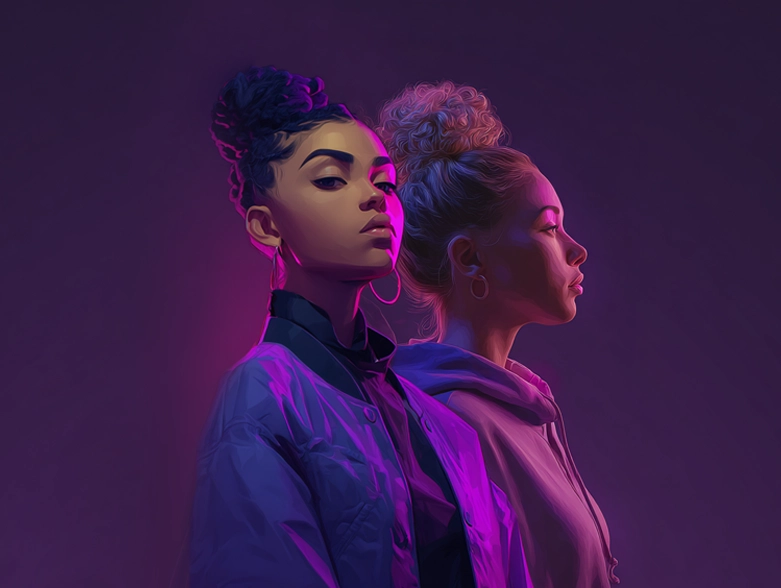
The definition of avatars in the metaverse changes depending on the context. For our purposes, let’s define them as avatars that can be customized and interacted with within digital environments. Likewise, let’s think of the metaverse as the digital space where these avatars exist and communicate with one another.
Metaverse avatars are the backbone of the metaverse concept. No virtual world or video game would be possible without them. To create a digital universe where people can do everything they would in real life, users need digital “vessels” for communication and interaction.
Online platforms like Roblox function not just as video games but as fully realized virtual worlds where people can build communities and explore environments together using their avatars.
Types of Metaverse Avatars
By Level of Realism
Stylized 3D avatars for metaverse use cases are designed according to a specific aesthetic or art style. They can be humanoid or completely abstract. Stylized human avatars may resemble real people but often have exaggerated features. For example, avatars inspired by Japanese animation might have larger eyes, colorful hair, and unconventional proportions.
Hyper-realistic avatars aim to look as close to real humans as possible without being unsettling. They are difficult to design due to the “uncanny valley” effect. When creating a realistic avatar, a 3D designer must pay close attention to the smallest details to ensure the final result looks natural and lifelike.
By Level of Customization
Pre-made 3D avatars for metaverse environments are ready-to-use and cannot be altered. This type of avatar is common on platforms like Roblox, where users can purchase avatars for Robux (the platform’s virtual currency) and use them as their digital identities.
AI-generated avatars offer some customization options, but results can be limited. You may need to generate multiple variations before finding one that best matches your vision.
Template-based avatars let users choose from preset body types, skin tones, clothing, and accessories. Some platforms even let users upload their own assets. However, these systems usually have limitations — an avatar maker designed for VTubers, for example, may not allow you to create something unusual.
Fully customized avatars are built from scratch using 3D graphics tools. One of the most advanced solutions is Unreal Engine’s MetaHuman, which provides exceptional realism and control.
If you prefer not to invest time in learning how to create 3D metaverse avatars from scratch — after all, it is a time-consuming process — you can commission a professional studio that specializes in AI and metaverse avatar creation.
Benefits of Having a Metaverse Avatar
Self-Expression
The metaverse and virtual platforms are creative spaces where imagination thrives. You can design your own environment and make characters that look like they came straight from a fantasy novel. The only real limitation is your technical skill and the customization options of your preferred platform.
Personal Branding
If you’re camera-shy but want to become a vlogger or content creator, a metaverse avatar can help you gain confidence and establish a personal brand. Many VTubers, for instance, build massive followings while maintaining complete anonymity.
Community Building
The internet has always been a hub for communities built around shared interests and passions. With metaverse avatars and digital meeting spaces, it’s easier than ever to connect with friends and collaborators from across the globe.
Metaverse Avatars for Business and Professional Use
Provide a more human-like digital interaction
Whether you need to communicate with co-workers during virtual meetings or guide clients toward making a purchase, metaverse avatars can bring a human element to any digital interaction. Don’t rely on impersonal chat boxes — let a welcoming digital personality greet clients and enhance their experience from the very first interaction.
Optimize your processes and provide better service
Avatars in the metaverse can help train staff to handle complex situations by allowing them to practice with realistic, yet safe, digital scenarios. Additionally, avatars integrated into HoloBoxes or interactive kiosks can represent your business at conferences or exhibitions, delivering product information to potential clients and capturing leads effectively.
Position your business as a tech-forward company
In today’s fast-paced world, positioning matters. Implementing a metaverse avatar demonstrates that your business is at the forefront of technological innovation. AI avatar technology is advancing rapidly, and integrating a digital representation into your marketing or operations strategy can help your company stay ahead of trends and even lead the way in your industry.
Reach new, younger, and tech-savvy audiences
To engage internet-native generations, you need to communicate in their digital language. Younger audiences are often early adopters of new technology and actively interact on platforms using metaverse avatars. Digital brand activations on platforms like Roblox and Fortnite can be highly effective, thanks to the dedication and activity of these user communities.

How to Create Your 3D Avatar for Metaverse Worlds
Define Your Goals
Before you create your 3D metaverse avatar, you need to clarify your purpose. Are you designing it for gaming, socializing, streaming, or business? Your goal will influence the tools you use, the style of your avatar, and how it represents you. For example, a gamer might choose a playful, cartoonish look, while a company might prefer a sleek, professional design aligned with its brand image.
Pick a Platform
Choose where your avatar will live. Options include VRChat for social interactions, Spatial or Microsoft Mesh for collaboration, and Decentraland for metaverse experiences. Consider ease of use, level of immersion, and whether the platform supports 3D avatars.
Choose an Avatar Creation Tool
Select a tool that fits your skills and needs:
- Ready Player Me – Create avatars from selfies quickly and easily.
- ZEPETO – Popular for social and lifestyle interactions.
- Blender – A free, open-source 3D modeling tool for advanced users.
- Reallusion’s Character Creator – Offers detailed customization for professionals.
- Unreal’s MetaHuman – Industry-leading tool for hyper-realistic avatars.
Customize and Personalize Your Avatar
Tailor your avatar’s look, clothing, and style to match your goals. For casual use, focus on creativity and fun. For business, ensure your avatar aligns with your brand colors, tone, and target audience.
Upload Your Avatar to the Platform
Once finished, upload your avatar to your chosen platform. Test its animations, gestures, and interactions to make sure it feels natural and functions smoothly within its environment.
Conclusion
Avatars in the metaverse are more than just digital characters. They’re the future of online identity and interaction. Whether for creativity, communication, or business innovation, avatars bridge the gap between the physical and digital worlds. As technology evolves, they’ll continue to redefine how we connect, collaborate, and express ourselves in virtual spaces. And with AI avatars and digital assistants, which go way beyond expectations, there’s no doubt we’ll witness a new virtual world revolution.
The metaverse isn’t some specific location that you can enter by clicking a link. It’s a playground that everyone is welcome to contribute to, no matter what their area of expertise is. Join it by creating your own digital representative — by yourself or with the help of professionals.
FAQ
How do I create my first metaverse avatar?
Choose a platform, select a creation tool, and customize it based on your purpose and preferences.
Can I use the same avatar across different metaverse platforms?
Some platforms, like Ready Player Me, support cross-compatibility, but not all systems do.
How much does it cost to create a metaverse avatar?
Costs range from free (using simple tools) to several thousand dollars for custom 3D avatars.
What equipment do I need?
A smartphone or computer is enough for 2D avatars; VR or motion-tracking hardware may be required for 3D avatars.
How realistic can metaverse avatars be?
Tools like MetaHuman allow near-photorealistic realism with natural facial and body movements.
Can I change my avatar’s appearance after creation?
Yes, most platforms let you edit or update your avatar anytime.
