

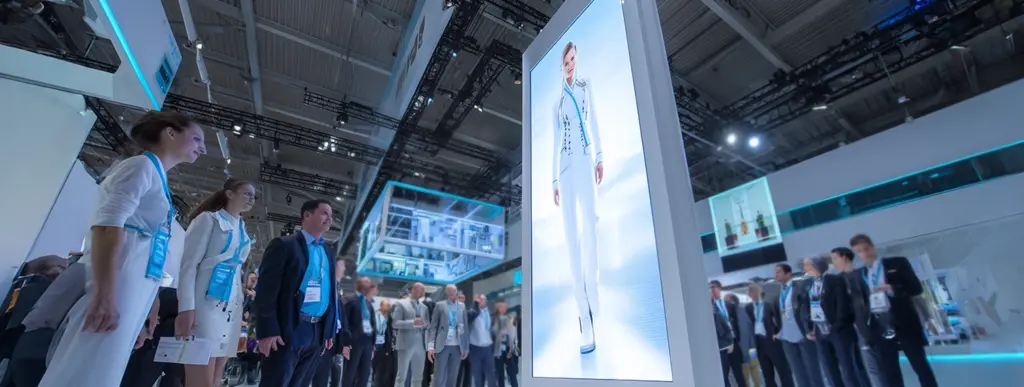
AI avatars are no longer a novelty at events — they’re becoming a competitive advantage. From trade show booths and keynote stages to hybrid conferences and product launches, AI avatar presenters are transforming how brands attract, engage, and qualify audiences.
In 2026, choosing the right AI avatar for events isn’t about picking the most realistic face or the newest technology. It’s about aligning the avatar capabilities with your event goals — whether that’s driving booth traffic, delivering multilingual presentations, capturing leads, or scaling brand presence across multiple locations simultaneously.
The wrong choice can feel gimmicky. The right choice will multiply engagement, extend attention spans, and turn passive visitors into active prospects. This guide will walk you through exactly how to evaluate, select, and deploy an interactive AI avatar that drives measurable event success in 2026.
Why AI Avatars Are Becoming Essential for Event Success
AI avatars solve the three biggest problems at high-traffic events: inconsistent messaging, limited staff capacity, and missed lead capture. Traditional booth staffing cannot scale to handle hundreds of simultaneous customer conversations — but a virtual AI assistant can.
AI event assistants handle product demonstrations, lead qualification, multilingual support, and CRM integration — tasks that previously required teams of specialists. Exhibitors using AI tools at trade shows report 15–30% higher qualified leads compared to manual methods.
Key Selection Criteria: What to Look for in an AI Event Avatar
The right AI event assistant must excel across six core capabilities. If you prioritize these criteria when evaluating avatar platforms, you’ll be able to choose a solution that fits your goals:
1. Conversational intelligence
The virtual avatar should use context-aware NLP to respond to follow-up questions, remember earlier statements within a conversation, and handle technical queries from knowledgeable audiences. Look for solutions integrating large language models with custom knowledge bases.
2. Lead capture and qualification
The interactive virtual avatar should collect contact information, assess company size, purchasing authority, and pain points during natural conversation. Data must sync directly to your CRM in real time, not via post-event CSV export.
3. Multilingual support
For international events, avatars that detect attendee language automatically and respond fluently in that language are a must-have. There are advanced solutions that support over a 100 languages with virtual voice synthesis that maintains natural intonation. Qualification data and transcripts should also be translated automatically.
4. Visual realism and brand alignment
Your avatar’s appearance must match your brand identity. See if the vendor of your choice offers photorealistic avatars built from motion capture or stylized digital characters. Custom clothing, branded environments, and personality design can make a huge difference at events where it’s difficult to stand out due to high traffic.
5. Deployment flexibility
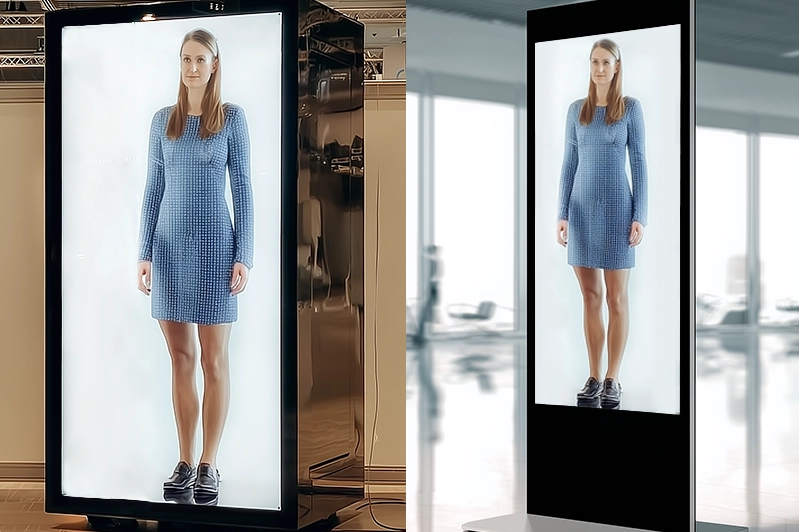
The avatar must integrate seamlessly with your chosen hardware: holoboxes for high-impact trade show booths, kiosk touchscreens for conference lobbies, mobile apps for attendee smartphones, or web widgets for virtual event extensions. Avoid vendors locked to a single display format.
6. Offline capability
Trade show venues often have unreliable WiFi. Enterprise-grade AI avatar solutions should operate on local processing without cloud dependency, ensuring your AI event assistant never goes out of order during peak traffic.
| Criterion | Must-Have | Nice-to-Have |
| Conversational AI | Context-aware NLP, custom knowledge base | Sentiment analysis, emotion detection |
| Lead capture | Real-time CRM sync | Predictive lead scoring |
| Languages | 10+ languages with auto-detect | Voice cloning per language |
| Visual quality | Branded avatar with lip sync | Full photorealistic motion capture |
| Deployment | Kiosk + web minimum | Holobox, mobile, Unity/Unreal |
| Offline mode | Core functions without internet | Full AI offline processing |
Choosing the Right Format for Your Event Type

Different event formats require different avatar deployment strategies. The format you choose directly impacts engagement, customer throughput, and ROI.
Trade show booths (high traffic, short interactions)
Holobox avatars are the most effective format for increasing booth traffic. A life-sized holographic AI avatar visible from across the expo floor creates immediate visual impact and draws visitors in. These interactive avatars can handle product introductions, capture leads, schedule follow-up meetings, and route qualified prospects to human staff. At Digital Residency, we deploy brand ambassador avatars across holoboxes and kiosks with CRM integration specifically designed for trade show environments.
Conferences and summits (medium traffic, deeper engagement)
Kiosk-based interactive avatars work best in conference settings where attendees seek specific information — session schedules, speaker details, venue navigation, or sponsor content. Multiple kiosks placed at registration areas, hallways, and sponsor zones ensure coverage without bottlenecks. The AI avatar serves as a virtual concierge available at every touchpoint.
Product launches and VIP events (low traffic, premium experience)
Photorealistic avatar experiences on large LED displays have the highest wow factor. While they’re more complex to produce, they make any event unforgettable. During a VIP product launch where only a select number of highly influential people is present, going all in on visuals can be an effective way of attracting powerful investors.
Hybrid and virtual events
Web-based AI avatars extend your presence beyond the physical venue. Attendees who cannot attend in person interact with the same virtual avatar on their devices. Mobile deployments support unlimited simultaneous conversations since each attendee uses their own smartphone.
| Event Type | Recommended Format | Engagement Style | Best Avatar Role |
| Trade show | Holobox + kiosk | High-volume, rapid | Lead capture + brand ambassador |
| Conference | Multi-kiosk network | Medium-volume, informational | Virtual concierge + wayfinding |
| Product launch | Large display / holo wall | Low-volume, premium | Digital twin keynote / demo |
| Hybrid / virtual | Web + mobile | Unlimited, self-serve | AI event assistant + Q&A |
Scalability and Performance: Ensuring Quality at High-Traffic Events
A single kiosk avatar handles one conversation at a time with digital queue management. To serve a 10,000-attendee expo, you need a scalability plan.
Multi-kiosk deployment is the most proven approach. Companies usually install 3–8 virtual avatar kiosks across their booth footprint, each running the same AI knowledge base but handling independent conversations. Bizzabo’s Klik SmartBadge technology drove a 389% increase in exhibitor leads at events using digital touchpoints — the same principle applies when pairing badge scanning with AI avatar interactions.
Mobile-first scaling eliminates queues entirely. When attendees interact through their own smartphones, the avatar handles unlimited simultaneous conversations and captures engagement data from every customer interaction.
Here are some performance benchmarks you can expect from experienced vendors:
- Response latency under 2 seconds for natural conversation flow
- 99.9% uptime guarantee for multi-day events
- Zero data loss on lead capture during connectivity interruptions
- Post-event analytics dashboard showing conversation volume, lead quality, and engagement duration
What to Consider when Implementing an AI Avatar at Events
Use this five-step framework to select the right AI avatar for events and avoid expensive mistakes.
Step 1: Define your primary goal
Lead generation requires strong CRM integration and qualification logic. Brand awareness favors visual impact and interactive novelty. Customer education needs deep knowledge base integration and technical conversation handling. Rank these priorities before evaluating avatar vendors.
Step 2: Match format to venue
Examine the floor plan and identify high-traffic zones and power/internet access points. Choose holobox for centerpiece installations, kiosks for distributed coverage, and mobile for maximum reach.
Step 3: Test the AI quality
Request a live interactive demo with a piece of your actual product data loaded. Ask the avatar complex, multi-turn questions. Evaluate whether the avatar maintains context or resets.
Step 4: Verify integration
Confirm that lead data flows directly into your CRM during the conversation, not after the event. Check that conversation transcripts are exportable. Ensure the avatar platform supports your badge scanning hardware.
Step 5: Plan for failure
What happens if WiFi drops or when 50 people queue simultaneously? Enterprise-grade solutions must offer offline fallback, automatic restart, and queue management as standard.
An interactive avatar for events should amplify your team’s strengths. The best deployments use AI avatars to handle first-touch engagement, qualification, and FAQs — then route high-value prospects to human staff for closing conversations.
Conclusion
The right AI avatar for events depends on three factors: your event type, your engagement goal, and your scalability requirements. Holobox avatars dominate trade show floors with visual impact. Kiosk networks cover conferences with consistent virtual AI service. Mobile-first deployments scale to any audience size. Evaluate platforms on conversational AI quality, CRM integration, multilingual support, offline capability, and deployment flexibility. In the end, choosing the right interactive avatar for events in 2026 is a matter of understanding customer needs, your own capabilities, and what your competitors offer.
FAQ
Can one AI avatar handle multiple languages at an international event?
Yes. Leading AI avatar platforms support 30+ languages with automatic detection. The avatar identifies the attendee’s language from their initial greeting or manual selection, then conducts the entire conversation — including lead qualification — in that language. Transcripts translate automatically in your CRM, making this a virtual necessity at international trade shows.
What is the difference between a holographic avatar and a kiosk avatar?
A holographic avatar appears as a three-dimensional figure inside a holobox or on a transparent display, creating the illusion of a real person standing in physical space. A kiosk avatar appears on a standard touchscreen. Holographic avatars generate significantly more foot traffic and dwell time due to their virtual novelty, making them ideal for trade show centerpieces. Kiosk avatars are more practical for distributed deployment across conference venues where multiple access points are needed.
How do AI event avatars integrate with CRM systems?
Enterprise AI avatar platforms connect directly to CRMs via API. During each conversation, the virtual avatar collects and scores lead data — contact details, company size, product interest, and intent signals — then pushes this into your CRM in real time. Sales teams receive pre-qualified leads with full conversation transcripts before the event day ends.
Do AI avatars work offline at trade shows with poor WiFi?
Digital Residency avatar solution supports offline operation with local processing. Core AI conversation capabilities, product knowledge, and lead capture continue functioning without internet connectivity. Data syncs to the cloud and CRM once connectivity is restored. This is critical for large expo venues where thousands of devices competing for bandwidth can make cloud-dependent solutions unreliable.
